<?xml version="1.0"?><!DOCTYPE html PUBLIC "-//W3C//DTD XHTML 1.1 plus MathML 2.0//EN" "http://www.w3.org/Math/DTD/mathml2/xhtml-math11-f.dtd">
<html xmlns="http://www.w3.org/1999/xhtml" xmlns:m="http://www.w3.org/1998/Math/MathML">
<head>
   <meta name="viewport" content="width=device-width, initial-scale=0.6" />
<OBJECT ID="mathplayer" CLASSID="clsid:32F66A20-7614-11D4-BD11-00104BD3F987"> <!--comment required to prevent this becoming an empty tag--></OBJECT>
<?IMPORT NAMESPACE="m" IMPLEMENTATION="#mathplayer" ?>  <link rel="stylesheet" href="/css/matkonyv.css" />
  <script type="text/javascript" src="/scripts/matkonyv.js"></script> 
<!--
 <script type="text/javascript" src="http://cdn.mathjax.org/mathjax/latest/MathJax.js?config=MML_HTMLorMML" />
-->
<script src="https://polyfill.io/v3/polyfill.min.js?features=es6"></script>
<script id="MathJax-script" src="https://cdn.jsdelivr.net/npm/mathjax@3/es5/tex-mml-chtml.js"></script>


<meta name="GENERATOR" content="TtM 3.72" />
 <style type="text/css">
 div.p { margin-top: 7pt; }
 span.roman {font-family: serif; font-style: normal; font-weight: normal;} 
</style>
<title>Matkönyv feladatgyűjtemény: FĂĽggvĂ©nyek 11--12</title>
  <link rel="stylesheet" href="/mathdisplay.css" type="text/css" />
</head>
<body>
<div id="navigation">


<div class="navcenter">
<div class="navdiv">
<a href="index.html">&nbsp;Matkönyv megjelenítő főoldal&nbsp;</a>&nbsp;
|&nbsp;<a href="list_html.php?mode=sne---j-">&nbsp;Matkönyv feladatgyűjtemények listája&nbsp;</a>&nbsp;
|&nbsp;<a href="volume.php?mode=sne---j-&amp;volume=f_iii">&nbsp;Tartalomjegyzék&nbsp;</a></div>
</div></div><div align="center" class="tochead"><h1>8. FEJEZET: Furcsa függvények</h1></div>
  <div id="mut" class="mut" onclick="style.display='none'; ">
    <div class="flec">Bezárás: <a class="flec" href="#">[ X ]</a> </div>
    <iframe type="application/xml" id="ifmut" width="80%" height="85%"></iframe>
  </div>

<div class="feladat"><b>Feladat: 8.1.</b><br /> <a name="f_iii_fura_ha_080302_01" /><a href="bib_box.php?mode=sne---j-&amp;citation_num=" target="bib_box" onclick="mutat('bib_box.php?mode=sne---j-&amp;citation_num='); return false;"></a>Van-e olyan <m:math xmlns="http://www.w3.org/1998/Math/MathML">

<m:mrow><m:mi>f</m:mi><m:mo>:</m:mo><m:mi>R</m:mi><m:mo>&rarr;</m:mo><m:mi>R</m:mi></m:mrow></m:math>

<br /><b>a)</b> függvény<br /><m:math xmlns="http://www.w3.org/1998/Math/MathML">

<m:mrow><m:mi>&ensp;</m:mi></m:mrow></m:math><br /><br /><m:math xmlns="http://www.w3.org/1998/Math/MathML">

<m:mrow><m:mi>&ensp;</m:mi></m:mrow></m:math><br /><b>b)</b> folytonos függvény<br /><m:math xmlns="http://www.w3.org/1998/Math/MathML">

<m:mrow><m:mi>&ensp;</m:mi></m:mrow></m:math><br /><br />

amelyre <m:math xmlns="http://www.w3.org/1998/Math/MathML">

<m:mrow><m:mi>f</m:mi><m:mo stretchy="false">(</m:mo><m:mi>x</m:mi><m:mo stretchy="false">)</m:mo></m:mrow></m:math> pontosan akkor racionális, ha <m:math xmlns="http://www.w3.org/1998/Math/MathML">

<m:mrow><m:mi>f</m:mi><m:mo stretchy="false">(</m:mo><m:mi>x</m:mi><m:mo>+</m:mo><m:mn>1</m:mn><m:mo stretchy="false">)</m:mo></m:mrow></m:math> irracionális?
<br />&nbsp;<br /><div align="right">[ <a class="link" href="exercise_box.php?mode=sne-s-j-&amp;label=F.III%3A%3Af_iii_fura_ha_080302_01" target="_blank" onclick="mutat('exercise_box.php?mode=sne-s-j-&amp;label=F.III%3A%3Af_iii_fura_ha_080302_01'); return false;">&nbsp;Megoldás&nbsp;</a>&nbsp;] </div></div>

<div class="feladat"><b>Feladat: 8.2.</b><br /> <a name="f_iii_fura_ha_080302_02" /><a href="bib_box.php?mode=sne---j-&amp;citation_num=" target="bib_box" onclick="mutat('bib_box.php?mode=sne---j-&amp;citation_num='); return false;"></a>Van-e olyan <m:math xmlns="http://www.w3.org/1998/Math/MathML">

<m:mrow><m:mi>f</m:mi><m:mo>:</m:mo><m:mi>R</m:mi><m:mo>&rarr;</m:mo><m:mi>R</m:mi></m:mrow></m:math> folytonos függvény, amelynek lokális szélsőértékhelyei:

<div class="p"><!----></div>

<b>a)</b> <m:math xmlns="http://www.w3.org/1998/Math/MathML">

<m:mrow>

<m:msub><m:mrow><m:mi>X</m:mi></m:mrow><m:mrow><m:mn>0</m:mn></m:mrow>

</m:msub>

<m:mo>=</m:mo><m:mo>-</m:mo><m:mn>2</m:mn></m:mrow></m:math> (minimum),  <m:math xmlns="http://www.w3.org/1998/Math/MathML">

<m:mrow>

<m:msub><m:mrow><m:mi>X</m:mi></m:mrow><m:mrow><m:mn>1</m:mn></m:mrow>

</m:msub>

<m:mo>=</m:mo><m:mn>0</m:mn></m:mrow></m:math> (maximum),  <m:math xmlns="http://www.w3.org/1998/Math/MathML">

<m:mrow>

<m:msub><m:mrow><m:mi>X</m:mi></m:mrow><m:mrow><m:mn>2</m:mn></m:mrow>

</m:msub>

<m:mo>=</m:mo><m:mn>2</m:mn></m:mrow></m:math> (minimum);

<div class="p"><!----></div>

<b>b)</b> <m:math xmlns="http://www.w3.org/1998/Math/MathML">

<m:mrow>

<m:msub><m:mrow><m:mi>X</m:mi></m:mrow><m:mrow><m:mn>0</m:mn></m:mrow>

</m:msub>

<m:mo>=</m:mo><m:mo>-</m:mo><m:mn>2</m:mn></m:mrow></m:math> (minimum),  <m:math xmlns="http://www.w3.org/1998/Math/MathML">

<m:mrow>

<m:msub><m:mrow><m:mi>X</m:mi></m:mrow><m:mrow><m:mn>1</m:mn></m:mrow>

</m:msub>

<m:mo>=</m:mo><m:mn>2</m:mn></m:mrow></m:math> (minimum);

<div class="p"><!----></div>

és más lokális szélsőértékhelye nincs? Van-e a mindenhol deriválható függvények között ilyen?
<br />&nbsp;<br /><div align="right">[ <a class="link" href="exercise_box.php?mode=sne-s-j-&amp;label=F.III%3A%3Af_iii_fura_ha_080302_02" target="_blank" onclick="mutat('exercise_box.php?mode=sne-s-j-&amp;label=F.III%3A%3Af_iii_fura_ha_080302_02'); return false;">&nbsp;Megoldás&nbsp;</a>&nbsp;] </div></div>

<div class="feladat"><b>Feladat: 8.3.</b><br /> <a name="f_iii_fura_ha_080218_02" /><a href="bib_box.php?mode=sne---j-&amp;citation_num=" target="bib_box" onclick="mutat('bib_box.php?mode=sne---j-&amp;citation_num='); return false;"></a>Legyen <m:math xmlns="http://www.w3.org/1998/Math/MathML">

<m:mrow><m:mi>f</m:mi></m:mrow></m:math> az <m:math xmlns="http://www.w3.org/1998/Math/MathML">

<m:mrow>

<m:msub><m:mrow><m:mi>x</m:mi></m:mrow><m:mrow><m:mn>0</m:mn></m:mrow>

</m:msub>

<m:mo>&isin;</m:mo><m:mi>R</m:mi></m:mrow></m:math> szám egy környezetében értelmezett függvény. 

Tekintsük a  <br />

<table width="100%"><tr><td align="center">

    <m:math xmlns="http://www.w3.org/1998/Math/MathML">

    <m:mstyle displaystyle="true"><m:mrow>

<m:munder><m:mo>lim</m:mo><m:mrow><m:mi mathvariant="italic">&Delta;</m:mi><m:mi>x</m:mi><m:mo>&rarr;</m:mo><m:mn>0</m:mn></m:mrow>

</m:munder>

<m:mfrac><m:mrow><m:mi>f</m:mi><m:mo stretchy="false">(</m:mo><m:mi>x</m:mi><m:mo>+</m:mo><m:mi mathvariant="italic">&Delta;</m:mi><m:mi>x</m:mi><m:mo stretchy="false">)</m:mo><m:mo>-</m:mo><m:mi>f</m:mi><m:mo stretchy="false">(</m:mo><m:mi>x</m:mi><m:mo stretchy="false">)</m:mo></m:mrow>

<m:mrow><m:mi mathvariant="italic">&Delta;</m:mi><m:mi>x</m:mi></m:mrow>

</m:mfrac>

<m:mo>,</m:mo><m:mi>&emsp;&emsp;&emsp;&emsp;&emsp;&emsp;</m:mi>

<m:munder><m:mo>lim</m:mo><m:mrow><m:mi mathvariant="italic">&Delta;</m:mi><m:mi>x</m:mi><m:mo>&rarr;</m:mo><m:mn>0</m:mn></m:mrow>

</m:munder>

<m:mfrac><m:mrow><m:mi>f</m:mi><m:mo stretchy="false">(</m:mo><m:mi>x</m:mi><m:mo>+</m:mo><m:mi mathvariant="italic">&Delta;</m:mi><m:mi>x</m:mi><m:mo stretchy="false">)</m:mo><m:mo>-</m:mo><m:mi>f</m:mi><m:mo stretchy="false">(</m:mo><m:mi>x</m:mi><m:mo>-</m:mo><m:mi mathvariant="italic">&Delta;</m:mi><m:mi>x</m:mi><m:mo stretchy="false">)</m:mo></m:mrow>

<m:mrow><m:mn>2</m:mn><m:mi mathvariant="italic">&Delta;</m:mi><m:mi>x</m:mi></m:mrow>

</m:mfrac>

</m:mrow>

    </m:mstyle></m:math>

</td></tr></table>

<br />

határértékeket. Szemléltessük jelentésüket! Melyikük létezéséből következtethetünk a másik létezésére? Milyen kapcsolat van a két határérték között, ha mindkettő létezik?
<br />&nbsp;<br /><div align="right">[ <a class="link" href="exercise_box.php?mode=sne-s-j-&amp;label=F.III%3A%3Af_iii_fura_ha_080218_02" target="_blank" onclick="mutat('exercise_box.php?mode=sne-s-j-&amp;label=F.III%3A%3Af_iii_fura_ha_080218_02'); return false;">&nbsp;Megoldás&nbsp;</a>&nbsp;] </div></div>

<div class="feladat"><b>Feladat: 8.4.</b><br /> <a name="f_iii_fura_ha_080218_03" /><a href="bib_box.php?mode=sne---j-&amp;citation_num=" target="bib_box" onclick="mutat('bib_box.php?mode=sne---j-&amp;citation_num='); return false;"></a>Legyen <m:math xmlns="http://www.w3.org/1998/Math/MathML">

<m:mrow><m:mi>f</m:mi></m:mrow></m:math> az <m:math xmlns="http://www.w3.org/1998/Math/MathML">

<m:mrow>

<m:msub><m:mrow><m:mi>x</m:mi></m:mrow><m:mrow><m:mn>0</m:mn></m:mrow>

</m:msub>

<m:mo>&isin;</m:mo><m:mi>R</m:mi></m:mrow></m:math> pont egy <m:math xmlns="http://www.w3.org/1998/Math/MathML">

<m:mrow><m:mi>U</m:mi></m:mrow></m:math> környezetében értelmezett, <m:math xmlns="http://www.w3.org/1998/Math/MathML">

<m:mrow>

<m:msub><m:mrow><m:mi>x</m:mi></m:mrow><m:mrow><m:mn>0</m:mn></m:mrow>

</m:msub>

</m:mrow></m:math>-ban differenciálható függvény. Mutassuk meg, hogy ha <m:math xmlns="http://www.w3.org/1998/Math/MathML">

<m:mrow><m:mo stretchy="false">{</m:mo>

<m:msub><m:mrow><m:mi mathvariant="italic">&alpha;</m:mi></m:mrow><m:mrow><m:mi>n</m:mi></m:mrow>

</m:msub>

<m:mo stretchy="false">}</m:mo><m:mo>&sub;</m:mo><m:mi>U</m:mi></m:mrow></m:math>, <m:math xmlns="http://www.w3.org/1998/Math/MathML">

<m:mrow><m:mo stretchy="false">{</m:mo>

<m:msub><m:mrow><m:mi mathvariant="italic">&beta;</m:mi></m:mrow><m:mrow><m:mi>n</m:mi></m:mrow>

</m:msub>

<m:mo stretchy="false">}</m:mo><m:mo>&sub;</m:mo><m:mi>U</m:mi></m:mrow></m:math> tetszőleges sorozatok, melyekre <m:math xmlns="http://www.w3.org/1998/Math/MathML">

<m:mrow>

<m:msub><m:mrow><m:mi mathvariant="italic">&alpha;</m:mi></m:mrow><m:mrow><m:mi>k</m:mi></m:mrow>

</m:msub>

<m:mo>&ne;</m:mo>

<m:msub><m:mrow><m:mi mathvariant="italic">&beta;</m:mi></m:mrow><m:mrow><m:mi>k</m:mi></m:mrow>

</m:msub>

</m:mrow></m:math> (<m:math xmlns="http://www.w3.org/1998/Math/MathML">

<m:mrow><m:mi>k</m:mi><m:mo>&isin;</m:mo><m:mi>N</m:mi></m:mrow></m:math>) és 

<br />

<table width="100%"><tr><td align="center">

    <m:math xmlns="http://www.w3.org/1998/Math/MathML">

    <m:mstyle displaystyle="true"><m:mrow>

<m:munder><m:mo>lim</m:mo><m:mrow><m:mi>k</m:mi><m:mo>&rarr;</m:mo><m:mi mathvariant="italic">&infin;</m:mi></m:mrow>

</m:munder>

<m:msub><m:mrow><m:mi mathvariant="italic">&alpha;</m:mi></m:mrow><m:mrow><m:mi>k</m:mi></m:mrow>

</m:msub>

<m:mo>=</m:mo>

<m:munder><m:mo>lim</m:mo><m:mrow><m:mi>k</m:mi><m:mo>&rarr;</m:mo><m:mi mathvariant="italic">&infin;</m:mi></m:mrow>

</m:munder>

<m:msub><m:mrow><m:mi mathvariant="italic">&beta;</m:mi></m:mrow><m:mrow><m:mi>k</m:mi></m:mrow>

</m:msub>

<m:mo>=</m:mo>

<m:msub><m:mrow><m:mi>x</m:mi></m:mrow><m:mrow><m:mn>0</m:mn></m:mrow>

</m:msub>

<m:mo>,</m:mo></m:mrow>

    </m:mstyle></m:math>

</td></tr></table>

<br />

akkor

<br />

<table width="100%"><tr><td align="center">

    <m:math xmlns="http://www.w3.org/1998/Math/MathML">

    <m:mstyle displaystyle="true"><m:mrow>

<m:munder><m:mo>lim</m:mo><m:mrow><m:mi>k</m:mi><m:mo>&rarr;</m:mo><m:mi mathvariant="italic">&infin;</m:mi></m:mrow>

</m:munder>

<m:mfrac><m:mrow><m:mi>f</m:mi><m:mo stretchy="false">(</m:mo>

<m:msub><m:mrow><m:mi mathvariant="italic">&alpha;</m:mi></m:mrow><m:mrow><m:mi>k</m:mi></m:mrow>

</m:msub>

<m:mo stretchy="false">)</m:mo><m:mo>-</m:mo><m:mi>f</m:mi><m:mo stretchy="false">(</m:mo>

<m:msub><m:mrow><m:mi mathvariant="italic">&beta;</m:mi></m:mrow><m:mrow><m:mi>k</m:mi></m:mrow>

</m:msub>

<m:mo stretchy="false">)</m:mo></m:mrow>

<m:mrow>

<m:msub><m:mrow><m:mi mathvariant="italic">&alpha;</m:mi></m:mrow><m:mrow><m:mi>k</m:mi></m:mrow>

</m:msub>

<m:mo>-</m:mo>

<m:msub><m:mrow><m:mi mathvariant="italic">&beta;</m:mi></m:mrow><m:mrow><m:mi>k</m:mi></m:mrow>

</m:msub>

</m:mrow>

</m:mfrac>

<m:mo>=</m:mo>

<m:msup><m:mrow><m:mi>f</m:mi></m:mrow><m:mrow><m:mo>'</m:mo></m:mrow>

</m:msup>

<m:mo stretchy="false">(</m:mo>

<m:msub><m:mrow><m:mi>x</m:mi></m:mrow><m:mrow><m:mn>0</m:mn></m:mrow>

</m:msub>

<m:mo stretchy="false">)</m:mo><m:mo>.</m:mo></m:mrow>

    </m:mstyle></m:math>

</td></tr></table>

<br />
<br />&nbsp;<br /></div>

<div class="feladat"><b>Feladat: 8.5.</b><br /> <a name="f_iii_fura_ha_080218_04" /><a href="bib_box.php?mode=sne---j-&amp;citation_num=" target="bib_box" onclick="mutat('bib_box.php?mode=sne---j-&amp;citation_num='); return false;"></a> Az alábbi függvények <m:math xmlns="http://www.w3.org/1998/Math/MathML">

<m:mrow><m:mn>0</m:mn></m:mrow></m:math>-n kívül minden valós számon értelmezettek. Közülük melyiket lehet úgy értelmezni <m:math xmlns="http://www.w3.org/1998/Math/MathML">

<m:mrow><m:mn>0</m:mn></m:mrow></m:math>-ban, hogy ott 

<div class="p"><!----></div>

<b>a)</b> folytonos &nbsp;&nbsp;&nbsp;&nbsp;&nbsp;&nbsp; <b>b)</b> differenciálható 

<div class="p"><!----></div>

legyen?

<div class="p"><!----></div>

<br />

<table width="100%"><tr><td align="center">

    <m:math xmlns="http://www.w3.org/1998/Math/MathML">

    <m:mstyle displaystyle="true"><m:mrow>

<m:msub><m:mrow><m:mi>f</m:mi></m:mrow><m:mrow><m:mn>1</m:mn></m:mrow>

</m:msub>

<m:mo stretchy="false">(</m:mo><m:mi>x</m:mi><m:mo stretchy="false">)</m:mo><m:mo>=</m:mo><m:mi>sin</m:mi>

<m:mfrac><m:mrow><m:mn>1</m:mn></m:mrow>

<m:mrow><m:mi>x</m:mi></m:mrow>

</m:mfrac>

<m:mo>,</m:mo><m:mi>&emsp;&emsp;&emsp;&emsp;&emsp;&emsp;</m:mi>

<m:msub><m:mrow><m:mi>f</m:mi></m:mrow><m:mrow><m:mn>2</m:mn></m:mrow>

</m:msub>

<m:mo stretchy="false">(</m:mo><m:mi>x</m:mi><m:mo stretchy="false">)</m:mo><m:mo>=</m:mo><m:mi>x</m:mi><m:mi>sin</m:mi>

<m:mfrac><m:mrow><m:mn>1</m:mn></m:mrow>

<m:mrow><m:mi>x</m:mi></m:mrow>

</m:mfrac>

<m:mo>,</m:mo><m:mi>&emsp;&emsp;&emsp;&emsp;&emsp;&emsp;</m:mi>

<m:msub><m:mrow><m:mi>f</m:mi></m:mrow><m:mrow><m:mn>3</m:mn></m:mrow>

</m:msub>

<m:mo stretchy="false">(</m:mo><m:mi>x</m:mi><m:mo stretchy="false">)</m:mo><m:mo>=</m:mo>

<m:msup><m:mrow><m:mi>x</m:mi></m:mrow><m:mrow><m:mn>2</m:mn></m:mrow>

</m:msup>

<m:mi>sin</m:mi>

<m:mfrac><m:mrow><m:mn>1</m:mn></m:mrow>

<m:mrow><m:mi>x</m:mi></m:mrow>

</m:mfrac>

<m:mo>.</m:mo></m:mrow>

    </m:mstyle></m:math>

</td></tr></table>

<br />
<br />&nbsp;<br /></div>

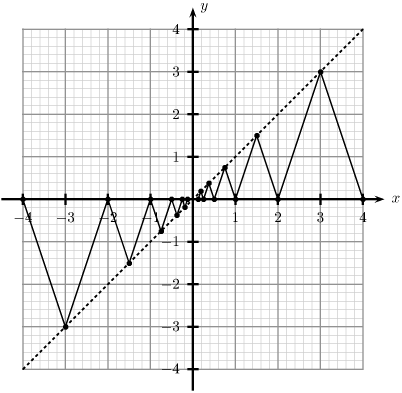
<div class="feladat"><b>Feladat: 8.6.</b><br /> <a name="f_iii_fura_ha_080218_05" /><a href="bib_box.php?mode=sne---j-&amp;citation_num=" target="bib_box" onclick="mutat('bib_box.php?mode=sne---j-&amp;citation_num='); return false;"></a> Az <a href="#fig:f_iii_fura_ha_080218_05fel" target="_self">1</a> ábrán a <m:math xmlns="http://www.w3.org/1998/Math/MathML">

<m:mrow><m:mi>g</m:mi></m:mrow></m:math> függvény grafikonja látható. A grafikon darabjai <m:math xmlns="http://www.w3.org/1998/Math/MathML">

<m:mrow><m:mn>3</m:mn></m:mrow></m:math> ill. <m:math xmlns="http://www.w3.org/1998/Math/MathML">

<m:mrow><m:mo stretchy="false">(</m:mo><m:mo>-</m:mo><m:mn>3</m:mn><m:mo stretchy="false">)</m:mo></m:mrow></m:math> meredekségű szakaszok, végpontjaik az <m:math xmlns="http://www.w3.org/1998/Math/MathML">

<m:mrow><m:mi>x</m:mi></m:mrow></m:math>-tengelyen ill. az <m:math xmlns="http://www.w3.org/1998/Math/MathML">

<m:mrow><m:mi>y</m:mi><m:mo>=</m:mo><m:mi>x</m:mi></m:mrow></m:math> egyenesen vannak. Legyen <m:math xmlns="http://www.w3.org/1998/Math/MathML">

<m:mrow><m:mi>g</m:mi><m:mo stretchy="false">(</m:mo><m:mn>0</m:mn><m:mo stretchy="false">)</m:mo><m:mo>=</m:mo><m:mn>0</m:mn></m:mrow></m:math>. 

<div class="p"><!----></div>

<b>a)</b> Mutassuk meg, hogy <m:math xmlns="http://www.w3.org/1998/Math/MathML">

<m:mrow><m:mi>g</m:mi></m:mrow></m:math> a <m:math xmlns="http://www.w3.org/1998/Math/MathML">

<m:mrow><m:mo stretchy="false">[</m:mo><m:mo>-</m:mo><m:mn>4</m:mn><m:mo>;</m:mo><m:mn>4</m:mn><m:mo stretchy="false">]</m:mo></m:mrow></m:math> intervallumban folytonos!

<div class="p"><!----></div>

<b>b)</b> Mutassuk meg, hogy <m:math xmlns="http://www.w3.org/1998/Math/MathML">

<m:mrow><m:mi>g</m:mi></m:mrow></m:math> a <m:math xmlns="http://www.w3.org/1998/Math/MathML">

<m:mrow><m:mo stretchy="false">(</m:mo><m:mo>-</m:mo><m:mn>4</m:mn><m:mo>;</m:mo><m:mn>4</m:mn><m:mo stretchy="false">)</m:mo></m:mrow></m:math> intervallumban végtelen sok helyen nem differenciálható!

<div class="p"><!----></div>

Jelöle <m:math xmlns="http://www.w3.org/1998/Math/MathML">

<m:mrow><m:mi>G</m:mi><m:mo stretchy="false">(</m:mo><m:mi>x</m:mi><m:mo stretchy="false">)</m:mo></m:mrow></m:math> a <m:math xmlns="http://www.w3.org/1998/Math/MathML">

<m:mrow><m:mi>g</m:mi></m:mrow></m:math> függvény grafikonja az <m:math xmlns="http://www.w3.org/1998/Math/MathML">

<m:mrow><m:mi>x</m:mi></m:mrow></m:math> tengely és az <m:math xmlns="http://www.w3.org/1998/Math/MathML">

<m:mrow><m:mi>x</m:mi><m:mo>=</m:mo><m:mo>-</m:mo><m:mn>4</m:mn></m:mrow></m:math> egyenes által határolt rész előjeles területét (az <m:math xmlns="http://www.w3.org/1998/Math/MathML">

<m:mrow><m:mi>x</m:mi></m:mrow></m:math> tengely alatti területrészek negatívan, az a fölöttiek pozitívan számolandók). Tehát pl <m:math xmlns="http://www.w3.org/1998/Math/MathML">

<m:mrow><m:mi>G</m:mi><m:mo stretchy="false">(</m:mo><m:mo>-</m:mo><m:mn>4</m:mn><m:mo stretchy="false">)</m:mo><m:mo>=</m:mo><m:mi>G</m:mi><m:mo stretchy="false">(</m:mo><m:mn>4</m:mn><m:mo stretchy="false">)</m:mo><m:mo>=</m:mo><m:mn>0</m:mn></m:mrow></m:math>.

<div class="p"><!----></div>

<b>c)</b> Mutassuk meg, hogy <m:math xmlns="http://www.w3.org/1998/Math/MathML">

<m:mrow><m:mi>G</m:mi></m:mrow></m:math> a <m:math xmlns="http://www.w3.org/1998/Math/MathML">

<m:mrow><m:mo stretchy="false">(</m:mo><m:mo>-</m:mo><m:mn>4</m:mn><m:mo>;</m:mo><m:mn>4</m:mn><m:mo stretchy="false">)</m:mo></m:mrow></m:math> intervallum minden pontjában differenciálható!

<div class="p"><!----></div>

<b>d)</b> Határozzuk meg <m:math xmlns="http://www.w3.org/1998/Math/MathML">

<m:mrow>

<m:msup><m:mrow><m:mi>G</m:mi></m:mrow><m:mrow><m:mo>'</m:mo></m:mrow>

</m:msup>

<m:mo stretchy="false">(</m:mo><m:mn>0</m:mn><m:mo stretchy="false">)</m:mo></m:mrow></m:math> értékét!

<div class="p"><!----></div>

<b>e)</b> Mutassuk meg, hogy <m:math xmlns="http://www.w3.org/1998/Math/MathML">

<m:mrow><m:mi>G</m:mi></m:mrow></m:math>-nek minimuma van <m:math xmlns="http://www.w3.org/1998/Math/MathML">

<m:mrow><m:mn>0</m:mn></m:mrow></m:math>-ban, de a <m:math xmlns="http://www.w3.org/1998/Math/MathML">

<m:mrow><m:mn>0</m:mn></m:mrow></m:math> egyik bal oldali környezetében sem igaz, hogy <m:math xmlns="http://www.w3.org/1998/Math/MathML">

<m:mrow>

<m:msup><m:mrow><m:mi>G</m:mi></m:mrow><m:mrow><m:mo>'</m:mo></m:mrow>

</m:msup>

<m:mo stretchy="false">(</m:mo><m:mi>x</m:mi><m:mo stretchy="false">)</m:mo><m:mo>&lt;</m:mo><m:mn>0</m:mn></m:mrow></m:math>!

<div class="p"><!----></div>

<a name="fig:f_iii_fura_ha_080218_05fel" /><div align="center"><img src="/cache/figures/chs_f_iii/f_iii_fura_ha_080218_05fel.png" /><br />1. ábra</div>
<br />&nbsp;<br /></div>

<div class="feladat"><b>Feladat: 8.7.</b><br /> <a name="f_iii_fura_ha_080218_06" />[<a href="bib_box.php?mode=sne---j-&amp;citation_num=89" target="bib_box" onclick="mutat('bib_box.php?mode=sne---j-&amp;citation_num=89'); return false;">89</a>] Mutassuk meg, hogy a

<div class="p"><!----></div>

<br />

<table width="100%"><tr><td align="center">

    <m:math xmlns="http://www.w3.org/1998/Math/MathML">

    <m:mstyle displaystyle="true"><m:mrow><m:mi>h</m:mi><m:mo stretchy="false">(</m:mo><m:mi>x</m:mi><m:mo stretchy="false">)</m:mo><m:mo>=</m:mo><m:mrow><m:mo>{</m:mo>

<m:mtable>

<m:mtr><m:mtd columnalign="right"><m:mrow><m:mi>x</m:mi><m:mo>+</m:mo>

<m:msup><m:mrow><m:mi>x</m:mi></m:mrow><m:mrow><m:mn>2</m:mn></m:mrow>

</m:msup>

<m:mo>,</m:mo></m:mrow></m:mtd><m:mtd columnalign="left"><m:mrow>

<m:mtext> ha </m:mtext>

<m:mi>x</m:mi>

<m:mtext> racionális</m:mtext>

<m:mo>,</m:mo></m:mrow></m:mtd></m:mtr>

<m:mtr><m:mtd columnalign="right"><m:mrow><m:mi>x</m:mi><m:mo>-</m:mo>

<m:msup><m:mrow><m:mi>x</m:mi></m:mrow><m:mrow><m:mn>2</m:mn></m:mrow>

</m:msup>

<m:mo>,</m:mo></m:mrow></m:mtd><m:mtd columnalign="left"><m:mrow>

<m:mtext> ha </m:mtext>

<m:mi>x</m:mi>

<m:mtext> irracionális</m:mtext>

<m:mo>;</m:mo></m:mrow></m:mtd></m:mtr></m:mtable>

<m:mo> </m:mo></m:mrow></m:mrow>

    </m:mstyle></m:math>

</td></tr></table>

<br />

függvény 

<div class="p"><!----></div>

<b>a)</b> a <m:math xmlns="http://www.w3.org/1998/Math/MathML">

<m:mrow><m:mn>0</m:mn></m:mrow></m:math>-ban differenciálható;

<div class="p"><!----></div>

<b>b)</b>  <m:math xmlns="http://www.w3.org/1998/Math/MathML">

<m:mrow>

<m:msup><m:mrow><m:mi>h</m:mi></m:mrow><m:mrow><m:mo>'</m:mo></m:mrow>

</m:msup>

<m:mo stretchy="false">(</m:mo><m:mn>0</m:mn><m:mo stretchy="false">)</m:mo><m:mo>&gt;</m:mo><m:mn>0</m:mn></m:mrow></m:math>;

<div class="p"><!----></div>

<b>c)</b> <m:math xmlns="http://www.w3.org/1998/Math/MathML">

<m:mrow><m:mn>0</m:mn></m:mrow></m:math> egyik környezetében sem monoton.
<br />&nbsp;<br /></div>

<div class="feladat"><b>Feladat: 8.8.</b><br /> <a name="f_iii_fura_ha_080218_01" /><a href="bib_box.php?mode=sne---j-&amp;citation_num=" target="bib_box" onclick="mutat('bib_box.php?mode=sne---j-&amp;citation_num='); return false;"></a>Döntsük el, hogy az alábbi függvények közül melyek folytonosak illetve differenciálhatóak az 

<div style="text-align:center">

<b>a)</b> <m:math xmlns="http://www.w3.org/1998/Math/MathML">

<m:mrow><m:mi>x</m:mi><m:mo>=</m:mo><m:mn>0</m:mn></m:mrow></m:math>, &nbsp;&nbsp;&nbsp;&nbsp;&nbsp;&nbsp; <b>b)</b> <m:math xmlns="http://www.w3.org/1998/Math/MathML">

<m:mrow><m:mi>x</m:mi><m:mo>=</m:mo><m:mn>1</m:mn></m:mrow></m:math>,&nbsp;&nbsp;&nbsp;&nbsp;&nbsp;&nbsp; <b>c)</b> <m:math xmlns="http://www.w3.org/1998/Math/MathML">

<m:mrow><m:mi>x</m:mi><m:mo>=</m:mo><m:msqrt><m:mrow><m:mn>2</m:mn></m:mrow></m:msqrt></m:mrow></m:math>

</div>

pontban!

<div class="p"><!----></div>

<b>I.</b> <m:math xmlns="http://www.w3.org/1998/Math/MathML">

<m:mrow>

<m:msub><m:mrow><m:mi>f</m:mi></m:mrow><m:mrow><m:mn>1</m:mn></m:mrow>

</m:msub>

<m:mo stretchy="false">(</m:mo><m:mi>x</m:mi><m:mo stretchy="false">)</m:mo><m:mo>=</m:mo><m:mrow><m:mo>{</m:mo>

<m:mtable>

<m:mtr><m:mtd columnalign="right"><m:mrow><m:mn>1</m:mn><m:mo>,</m:mo></m:mrow></m:mtd><m:mtd columnalign="left"><m:mrow>

<m:mtext> ha </m:mtext>

<m:mi>x</m:mi>

<m:mtext> racionális,</m:mtext>

</m:mrow></m:mtd></m:mtr>

<m:mtr><m:mtd columnalign="right"><m:mrow><m:mn>0</m:mn><m:mo>,</m:mo></m:mrow></m:mtd><m:mtd columnalign="left"><m:mrow>

<m:mtext> ha </m:mtext>

<m:mi>x</m:mi>

<m:mtext> irracionális.</m:mtext>

</m:mrow></m:mtd></m:mtr></m:mtable>

<m:mo> </m:mo></m:mrow></m:mrow></m:math>

<div class="p"><!----></div>

<b>II.</b> <m:math xmlns="http://www.w3.org/1998/Math/MathML">

<m:mrow>

<m:msub><m:mrow><m:mi>f</m:mi></m:mrow><m:mrow><m:mn>2</m:mn></m:mrow>

</m:msub>

<m:mo stretchy="false">(</m:mo><m:mi>x</m:mi><m:mo stretchy="false">)</m:mo><m:mo>=</m:mo><m:mrow><m:mo>{</m:mo>

<m:mtable>

<m:mtr><m:mtd columnalign="right"><m:mrow><m:mi>x</m:mi><m:mo>,</m:mo></m:mrow></m:mtd><m:mtd columnalign="left"><m:mrow>

<m:mtext> ha </m:mtext>

<m:mi>x</m:mi>

<m:mtext> racionális,</m:mtext>

</m:mrow></m:mtd></m:mtr>

<m:mtr><m:mtd columnalign="right"><m:mrow><m:mo>-</m:mo><m:mi>x</m:mi><m:mo>,</m:mo></m:mrow></m:mtd><m:mtd columnalign="left"><m:mrow>

<m:mtext> ha </m:mtext>

<m:mi>x</m:mi>

<m:mtext> irracionális.</m:mtext>

</m:mrow></m:mtd></m:mtr></m:mtable>

<m:mo> </m:mo></m:mrow></m:mrow></m:math>

<div class="p"><!----></div>

<b>III.</b> <m:math xmlns="http://www.w3.org/1998/Math/MathML">

<m:mrow>

<m:msub><m:mrow><m:mi>f</m:mi></m:mrow><m:mrow><m:mn>3</m:mn></m:mrow>

</m:msub>

<m:mo stretchy="false">(</m:mo><m:mi>x</m:mi><m:mo stretchy="false">)</m:mo><m:mo>=</m:mo><m:mrow><m:mo>{</m:mo>

<m:mtable>

<m:mtr><m:mtd columnalign="right"><m:mrow>

<m:msup><m:mrow><m:mi>x</m:mi></m:mrow><m:mrow><m:mn>2</m:mn></m:mrow>

</m:msup>

<m:mo>,</m:mo></m:mrow></m:mtd><m:mtd columnalign="left"><m:mrow>

<m:mtext> ha </m:mtext>

<m:mi>x</m:mi>

<m:mtext> racionális,</m:mtext>

</m:mrow></m:mtd></m:mtr>

<m:mtr><m:mtd columnalign="right"><m:mrow><m:mo>-</m:mo>

<m:msup><m:mrow><m:mi>x</m:mi></m:mrow><m:mrow><m:mn>2</m:mn></m:mrow>

</m:msup>

<m:mo>,</m:mo></m:mrow></m:mtd><m:mtd columnalign="left"><m:mrow>

<m:mtext> ha </m:mtext>

<m:mi>x</m:mi>

<m:mtext> irracionális.</m:mtext>

</m:mrow></m:mtd></m:mtr></m:mtable>

<m:mo> </m:mo></m:mrow></m:mrow></m:math>

<div class="p"><!----></div>

<b>IV.</b> <m:math xmlns="http://www.w3.org/1998/Math/MathML">

<m:mrow>

<m:msub><m:mrow><m:mi>f</m:mi></m:mrow><m:mrow><m:mn>4</m:mn></m:mrow>

</m:msub>

<m:mo stretchy="false">(</m:mo><m:mi>x</m:mi><m:mo stretchy="false">)</m:mo><m:mo>=</m:mo><m:mrow><m:mo>{</m:mo>

<m:mtable>

<m:mtr><m:mtd columnalign="right"><m:mrow>

<m:mfrac><m:mrow><m:mn>1</m:mn></m:mrow>

<m:mrow>

<m:msup><m:mrow><m:mi>q</m:mi></m:mrow><m:mrow><m:mn>3</m:mn></m:mrow>

</m:msup>

</m:mrow>

</m:mfrac>

<m:mo>,</m:mo></m:mrow></m:mtd><m:mtd columnalign="left"><m:mrow>

<m:mtext> ha </m:mtext>

<m:mi>x</m:mi><m:mo>=</m:mo>

<m:mfrac><m:mrow><m:mi>p</m:mi></m:mrow>

<m:mrow><m:mi>q</m:mi></m:mrow>

</m:mfrac>

<m:mo>,</m:mo><m:mi>p</m:mi><m:mo>&isin;</m:mo><m:mi>Z</m:mi><m:mo>,</m:mo><m:mi>q</m:mi><m:mo>&isin;</m:mo>

<m:msup><m:mrow><m:mi>N</m:mi></m:mrow><m:mrow><m:mo>+</m:mo></m:mrow>

</m:msup>

<m:mo>,</m:mo><m:mo stretchy="false">(</m:mo><m:mi>p</m:mi><m:mo>,</m:mo><m:mi>q</m:mi><m:mo stretchy="false">)</m:mo><m:mo>=</m:mo><m:mn>1</m:mn><m:mo>,</m:mo></m:mrow></m:mtd></m:mtr>

<m:mtr><m:mtd columnalign="right"><m:mrow><m:mn>0</m:mn><m:mo>,</m:mo></m:mrow></m:mtd><m:mtd columnalign="left"><m:mrow>

<m:mtext> ha </m:mtext>

<m:mi>x</m:mi>

<m:mtext> irracionális.</m:mtext>

</m:mrow></m:mtd></m:mtr></m:mtable>

<m:mo> </m:mo></m:mrow></m:mrow></m:math>
<br />&nbsp;<br /></div>

<div class="feladat"><b>Feladat: 8.9.</b><br /> <a name="f_iii_fura_ha_080218_07" /><a href="bib_box.php?mode=sne---j-&amp;citation_num=" target="bib_box" onclick="mutat('bib_box.php?mode=sne---j-&amp;citation_num='); return false;"></a>Van-e olyan függvény, amely az <m:math xmlns="http://www.w3.org/1998/Math/MathML">

<m:mrow><m:mo stretchy="false">[</m:mo><m:mn>0</m:mn><m:mo>;</m:mo><m:mn>1</m:mn><m:mo stretchy="false">]</m:mo></m:mrow></m:math> intervallumon folytonos, kontinum sok helyen zérus, de nincs olyan nem üres nyílt intervallum, amelyen azonosan <m:math xmlns="http://www.w3.org/1998/Math/MathML">

<m:mrow><m:mn>0</m:mn></m:mrow></m:math>?
<br />&nbsp;<br /></div>

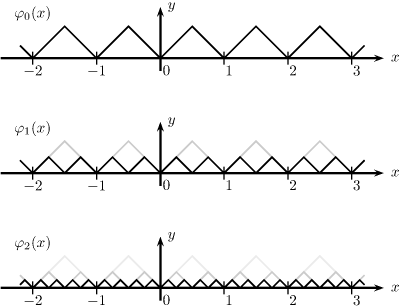
<div class="feladat"><b>Feladat: 8.10.</b><br /> <a name="f_iii_fura_ha_080218_08" />[<a href="bib_box.php?mode=sne---j-&amp;citation_num=155" target="bib_box" onclick="mutat('bib_box.php?mode=sne---j-&amp;citation_num=155'); return false;">155</a>] <em>Van-der-Waerden függvénye</em>

A <m:math xmlns="http://www.w3.org/1998/Math/MathML">

<m:mrow>

<m:msub><m:mrow><m:mi mathvariant="italic">&phiv;</m:mi></m:mrow><m:mrow><m:mn>0</m:mn></m:mrow>

</m:msub>

</m:mrow></m:math> függvény grafikonja az <a href="#fig:f_iii_fura_ha_080218_08fel" target="_self">1</a>. ábra felső részén látható, <m:math xmlns="http://www.w3.org/1998/Math/MathML">

<m:mrow>

<m:msub><m:mrow><m:mi mathvariant="italic">&phiv;</m:mi></m:mrow><m:mrow><m:mn>0</m:mn></m:mrow>

</m:msub>

</m:mrow></m:math> periódusa <m:math xmlns="http://www.w3.org/1998/Math/MathML">

<m:mrow><m:mn>1</m:mn></m:mrow></m:math>, értékkészlete a <m:math xmlns="http://www.w3.org/1998/Math/MathML">

<m:mrow><m:mo stretchy="false">[</m:mo><m:mn>0</m:mn><m:mo>;</m:mo>

<m:mfrac><m:mrow><m:mn>1</m:mn></m:mrow>

<m:mrow><m:mn>2</m:mn></m:mrow>

</m:mfrac>

<m:mo stretchy="false">]</m:mo></m:mrow></m:math> intervallum. A grafikon szimmetrikus az <m:math xmlns="http://www.w3.org/1998/Math/MathML">

<m:mrow><m:mi>x</m:mi><m:mo>=</m:mo>

<m:mfrac><m:mrow><m:mi>k</m:mi></m:mrow>

<m:mrow><m:mn>2</m:mn></m:mrow>

</m:mfrac>

</m:mrow></m:math> (<m:math xmlns="http://www.w3.org/1998/Math/MathML">

<m:mrow><m:mi>k</m:mi><m:mo>&isin;</m:mo><m:mi>Z</m:mi></m:mrow></m:math>) egyenesekre. 

Legyen <m:math xmlns="http://www.w3.org/1998/Math/MathML">

<m:mrow>

<m:msub><m:mrow><m:mi mathvariant="italic">&phiv;</m:mi></m:mrow><m:mrow><m:mi>n</m:mi></m:mrow>

</m:msub>

<m:mo stretchy="false">(</m:mo><m:mi>x</m:mi><m:mo stretchy="false">)</m:mo><m:mo>=</m:mo>

<m:mfrac><m:mrow><m:mn>1</m:mn></m:mrow>

<m:mrow>

<m:msup><m:mrow><m:mn>2</m:mn></m:mrow><m:mrow><m:mi>n</m:mi></m:mrow>

</m:msup>

</m:mrow>

</m:mfrac>

<m:msub><m:mrow><m:mi mathvariant="italic">&phiv;</m:mi></m:mrow><m:mrow><m:mn>0</m:mn></m:mrow>

</m:msub>

<m:mo stretchy="false">(</m:mo>

<m:msup><m:mrow><m:mn>2</m:mn></m:mrow><m:mrow><m:mi>n</m:mi></m:mrow>

</m:msup>

<m:mi>x</m:mi><m:mo stretchy="false">)</m:mo></m:mrow></m:math> (<m:math xmlns="http://www.w3.org/1998/Math/MathML">

<m:mrow><m:mi>n</m:mi><m:mo>&isin;</m:mo>

<m:msup><m:mrow><m:mi>N</m:mi></m:mrow><m:mrow><m:mo>+</m:mo></m:mrow>

</m:msup>

</m:mrow></m:math>). A <m:math xmlns="http://www.w3.org/1998/Math/MathML">

<m:mrow>

<m:msub><m:mrow><m:mi mathvariant="italic">&phiv;</m:mi></m:mrow><m:mrow><m:mn>1</m:mn></m:mrow>

</m:msub>

</m:mrow></m:math>, <m:math xmlns="http://www.w3.org/1998/Math/MathML">

<m:mrow>

<m:msub><m:mrow><m:mi mathvariant="italic">&phiv;</m:mi></m:mrow><m:mrow><m:mn>2</m:mn></m:mrow>

</m:msub>

</m:mrow></m:math> függvények grafikonja feketével húzva látható az alábbi ábra középső ill. alsó részén. Legyen továbbá

<br />

<table width="100%"><tr><td align="center">

    <m:math xmlns="http://www.w3.org/1998/Math/MathML">

    <m:mstyle displaystyle="true"><m:mrow>

<m:msub><m:mrow><m:mi mathvariant="italic">&Phi;</m:mi></m:mrow><m:mrow><m:mi>n</m:mi></m:mrow>

</m:msub>

<m:mo stretchy="false">(</m:mo><m:mi>x</m:mi><m:mo stretchy="false">)</m:mo><m:mo>=</m:mo>

<m:msub><m:mrow><m:mi mathvariant="italic">&phiv;</m:mi></m:mrow><m:mrow><m:mn>0</m:mn></m:mrow>

</m:msub>

<m:mo stretchy="false">(</m:mo><m:mi>x</m:mi><m:mo stretchy="false">)</m:mo><m:mo>+</m:mo>

<m:msub><m:mrow><m:mi mathvariant="italic">&phiv;</m:mi></m:mrow><m:mrow><m:mn>1</m:mn></m:mrow>

</m:msub>

<m:mo stretchy="false">(</m:mo><m:mi>x</m:mi><m:mo stretchy="false">)</m:mo><m:mo>+</m:mo><m:mo>&#x2026;</m:mo><m:mo>+</m:mo>

<m:msub><m:mrow><m:mi mathvariant="italic">&phiv;</m:mi></m:mrow><m:mrow><m:mi>n</m:mi></m:mrow>

</m:msub>

<m:mo stretchy="false">(</m:mo><m:mi>x</m:mi><m:mo stretchy="false">)</m:mo><m:mo>.</m:mo></m:mrow>

    </m:mstyle></m:math>

</td></tr></table>

<br />

<div class="p"><!----></div>

<a name="fig:f_iii_fura_ha_080218_08fel" /><div align="center"><img src="/cache/figures/chs_f_iii/f_iii_fura_ha_080218_08fel.png" /><br />1. ábra</div>

<div class="p"><!----></div>

<b>a)</b> Rajzoljuk meg a <m:math xmlns="http://www.w3.org/1998/Math/MathML">

<m:mrow>

<m:msub><m:mrow><m:mi mathvariant="italic">&Phi;</m:mi></m:mrow><m:mrow><m:mn>1</m:mn></m:mrow>

</m:msub>

</m:mrow></m:math>, <m:math xmlns="http://www.w3.org/1998/Math/MathML">

<m:mrow>

<m:msub><m:mrow><m:mi mathvariant="italic">&Phi;</m:mi></m:mrow><m:mrow><m:mn>2</m:mn></m:mrow>

</m:msub>

</m:mrow></m:math>, <m:math xmlns="http://www.w3.org/1998/Math/MathML">

<m:mrow>

<m:msub><m:mrow><m:mi mathvariant="italic">&Phi;</m:mi></m:mrow><m:mrow><m:mn>3</m:mn></m:mrow>

</m:msub>

</m:mrow></m:math> függvények grafikonját!

<div class="p"><!----></div>

<b>b)</b> Mutassuk meg, hogy <m:math xmlns="http://www.w3.org/1998/Math/MathML">

<m:mrow>

<m:msub><m:mrow><m:mi mathvariant="italic">&Phi;</m:mi></m:mrow><m:mrow><m:mi>k</m:mi></m:mrow>

</m:msub>

</m:mrow></m:math> grafikonja egyenes szakaszokból áll és ezek meredeksége olyan egész, amelynek paritása <m:math xmlns="http://www.w3.org/1998/Math/MathML">

<m:mrow><m:mo stretchy="false">(</m:mo><m:mi>k</m:mi><m:mo>+</m:mo><m:mn>1</m:mn><m:mo stretchy="false">)</m:mo></m:mrow></m:math> paritásával egyezik meg.

<div class="p"><!----></div>

<b>c)</b> Mutassuk meg, hogy a <m:math xmlns="http://www.w3.org/1998/Math/MathML">

<m:mrow><m:mi mathvariant="italic">&Phi;</m:mi><m:mo stretchy="false">(</m:mo><m:mi>x</m:mi><m:mo stretchy="false">)</m:mo><m:mo>=</m:mo>

<m:munder><m:mo>lim</m:mo><m:mrow><m:mi>n</m:mi><m:mo>&rarr;</m:mo><m:mi mathvariant="italic">&infin;</m:mi></m:mrow>

</m:munder>

<m:msub><m:mrow><m:mi mathvariant="italic">&Phi;</m:mi></m:mrow><m:mrow><m:mi>n</m:mi></m:mrow>

</m:msub>

<m:mo stretchy="false">(</m:mo><m:mi>x</m:mi><m:mo stretchy="false">)</m:mo></m:mrow></m:math> határérték minden <m:math xmlns="http://www.w3.org/1998/Math/MathML">

<m:mrow><m:mi>x</m:mi><m:mo>&isin;</m:mo><m:mi>R</m:mi></m:mrow></m:math>-re létezik!

<div class="p"><!----></div>

<b>d)</b> Mutassuk meg, hogy a <m:math xmlns="http://www.w3.org/1998/Math/MathML">

<m:mrow><m:mi mathvariant="italic">&Phi;</m:mi><m:mo stretchy="false">(</m:mo><m:mi>x</m:mi><m:mo stretchy="false">)</m:mo></m:mrow></m:math> függvény minden <m:math xmlns="http://www.w3.org/1998/Math/MathML">

<m:mrow><m:mi>x</m:mi><m:mo>&isin;</m:mo><m:mi>R</m:mi></m:mrow></m:math>-ben folytonos!

<div class="p"><!----></div>

<b>e)</b> Mutassuk meg, hogy a <m:math xmlns="http://www.w3.org/1998/Math/MathML">

<m:mrow><m:mi mathvariant="italic">&Phi;</m:mi><m:mo stretchy="false">(</m:mo><m:mi>x</m:mi><m:mo stretchy="false">)</m:mo></m:mrow></m:math> függvény semelyik <m:math xmlns="http://www.w3.org/1998/Math/MathML">

<m:mrow><m:mi>x</m:mi><m:mo>&isin;</m:mo><m:mi>R</m:mi></m:mrow></m:math>-ben sem differenciálható!

<div class="p"><!----></div>

<b>f)</b> Határozzuk meg <m:math xmlns="http://www.w3.org/1998/Math/MathML">

<m:mrow><m:mi mathvariant="italic">&Phi;</m:mi><m:mo stretchy="false">(</m:mo><m:mi>x</m:mi><m:mo stretchy="false">)</m:mo></m:mrow></m:math> maximumát!

<div class="p"><!----></div>

<b>g)</b> Adjuk meg <m:math xmlns="http://www.w3.org/1998/Math/MathML">

<m:mrow><m:mi mathvariant="italic">&Phi;</m:mi><m:mo stretchy="false">(</m:mo><m:mi>x</m:mi><m:mo stretchy="false">)</m:mo></m:mrow></m:math> összes maximumhelyét!
<br />&nbsp;<br /><div align="right">[ <a class="link" href="exercise_box.php?mode=sne-s-j-&amp;label=F.III%3A%3Af_iii_fura_ha_080218_08" target="_blank" onclick="mutat('exercise_box.php?mode=sne-s-j-&amp;label=F.III%3A%3Af_iii_fura_ha_080218_08'); return false;">&nbsp;Megoldás&nbsp;</a>&nbsp;] </div></div>
<div style="height:30pt;">&nbsp;</div>
<div id="navigation">


<div class="navcenter">
<div class="navdiv">
<a href="index.html">&nbsp;Matkönyv megjelenítő főoldal&nbsp;</a>&nbsp;
|&nbsp;<a href="list_html.php?mode=sne---j-">&nbsp;Matkönyv feladatgyűjtemények listája&nbsp;</a>&nbsp;
|&nbsp;<a href="volume.php?mode=sne---j-&amp;volume=f_iii">&nbsp;Tartalomjegyzék&nbsp;</a></div>
</div></div></body></html>