<?xml version="1.0"?><!DOCTYPE html PUBLIC "-//W3C//DTD XHTML 1.1 plus MathML 2.0//EN" "http://www.w3.org/Math/DTD/mathml2/xhtml-math11-f.dtd">
<html xmlns="http://www.w3.org/1999/xhtml" xmlns:m="http://www.w3.org/1998/Math/MathML">
<head>
   <meta name="viewport" content="width=device-width, initial-scale=0.6" />
<OBJECT ID="mathplayer" CLASSID="clsid:32F66A20-7614-11D4-BD11-00104BD3F987"> <!--comment required to prevent this becoming an empty tag--></OBJECT>
<?IMPORT NAMESPACE="m" IMPLEMENTATION="#mathplayer" ?>  <link rel="stylesheet" href="/css/matkonyv.css" />
  <script type="text/javascript" src="/scripts/matkonyv.js"></script> 
<!--
 <script type="text/javascript" src="http://cdn.mathjax.org/mathjax/latest/MathJax.js?config=MML_HTMLorMML" />
-->
<script src="https://polyfill.io/v3/polyfill.min.js?features=es6"></script>
<script id="MathJax-script" src="https://cdn.jsdelivr.net/npm/mathjax@3/es5/tex-mml-chtml.js"></script>


<meta name="GENERATOR" content="TtM 3.72" />
 <style type="text/css">
 div.p { margin-top: 7pt; }
 span.roman {font-family: serif; font-style: normal; font-weight: normal;} 
</style>
<title>Matkönyv feladatgyűjtemény: FĂĽggvĂ©nyek 11--12</title>
  <link rel="stylesheet" href="/mathdisplay.css" type="text/css" />
</head>
<body>
<div id="navigation">


<div class="navcenter">
<div class="navdiv">
<a href="index.html">&nbsp;Matkönyv megjelenítő főoldal&nbsp;</a>&nbsp;
|&nbsp;<a href="list_html.php?mode=sne---j-">&nbsp;Matkönyv feladatgyűjtemények listája&nbsp;</a>&nbsp;
|&nbsp;<a href="volume.php?mode=sne---j-&amp;volume=f_iii">&nbsp;Tartalomjegyzék&nbsp;</a></div>
</div></div><div align="center" class="tochead"><h1>9. FEJEZET: Vegyes feladatok</h1></div>
  <div id="mut" class="mut" onclick="style.display='none'; ">
    <div class="flec">Bezárás: <a class="flec" href="#">[ X ]</a> </div>
    <iframe type="application/xml" id="ifmut" width="80%" height="85%"></iframe>
  </div>

<div class="feladat"><b>Feladat: 9.1.</b><br /> <a name="f_iii_vegyes_ha_080218_01" />[<a href="bib_box.php?mode=sne---j-&amp;citation_num=80" target="bib_box" onclick="mutat('bib_box.php?mode=sne---j-&amp;citation_num=80'); return false;">80</a>] Az <m:math xmlns="http://www.w3.org/1998/Math/MathML">

<m:mrow><m:mi>f</m:mi></m:mrow></m:math> folytonos és monoton növekedő függvény a <m:math xmlns="http://www.w3.org/1998/Math/MathML">

<m:mrow><m:mo stretchy="false">[</m:mo><m:mn>0</m:mn><m:mo>;</m:mo><m:mn>1</m:mn><m:mo stretchy="false">]</m:mo></m:mrow></m:math> intervallumban értelmezett, és értékkészlete is ugyanez az intervallum, továbbá <m:math xmlns="http://www.w3.org/1998/Math/MathML">

<m:mrow><m:mi>f</m:mi><m:mo stretchy="false">(</m:mo><m:mn>0</m:mn><m:mo stretchy="false">)</m:mo><m:mo>=</m:mo><m:mn>0</m:mn></m:mrow></m:math>, <m:math xmlns="http://www.w3.org/1998/Math/MathML">

<m:mrow><m:mi>f</m:mi><m:mo stretchy="false">(</m:mo><m:mn>1</m:mn><m:mo stretchy="false">)</m:mo><m:mo>=</m:mo><m:mn>1</m:mn></m:mrow></m:math>. Bizonyítsuk be, hogy a függvény grafikonját le lehet fedni <m:math xmlns="http://www.w3.org/1998/Math/MathML">

<m:mrow><m:mi>n</m:mi></m:mrow></m:math> darab egyenként <m:math xmlns="http://www.w3.org/1998/Math/MathML">

<m:mrow>

<m:mfrac><m:mrow><m:mn>1</m:mn></m:mrow>

<m:mrow>

<m:msup><m:mrow><m:mi>n</m:mi></m:mrow><m:mrow><m:mn>2</m:mn></m:mrow>

</m:msup>

</m:mrow>

</m:mfrac>

</m:mrow></m:math> területű téglalappal (a téglalapok oldalai párhuzamosak a koordinátatengelyekkel)!
<br />&nbsp;<br /></div>

<div class="feladat"><b>Feladat: 9.2.</b><br /> <a name="f_iii_vegyes_stirling_090605ha_01" />[<a href="bib_box.php?mode=sne---j-&amp;citation_num=5" target="bib_box" onclick="mutat('bib_box.php?mode=sne---j-&amp;citation_num=5'); return false;">5</a>] <em>Stirling formula</em>

<div class="p"><!----></div>

Alább a logaritmus görbe alatti, <m:math xmlns="http://www.w3.org/1998/Math/MathML">

<m:mrow><m:mn>1</m:mn></m:mrow></m:math> és <m:math xmlns="http://www.w3.org/1998/Math/MathML">

<m:mrow><m:mi>n</m:mi></m:mrow></m:math> abszcisszák közés eső <m:math xmlns="http://www.w3.org/1998/Math/MathML">

<m:mrow>

<m:msub><m:mrow><m:mi>I</m:mi></m:mrow><m:mrow><m:mi>n</m:mi></m:mrow>

</m:msub>

</m:mrow></m:math> területének vizsgálatából <m:math xmlns="http://www.w3.org/1998/Math/MathML">

<m:mrow><m:mi>n</m:mi><m:mo>!</m:mo></m:mrow></m:math> értékére nyerünk aszimptotikus formulát. 

<div class="p"><!----></div>

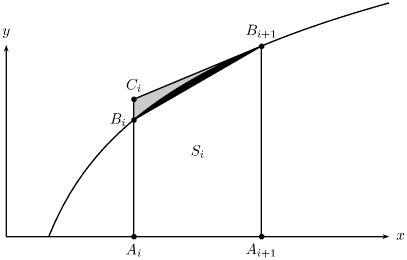
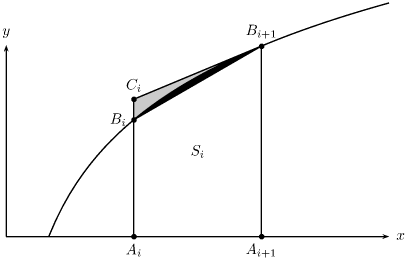
Legyen <m:math xmlns="http://www.w3.org/1998/Math/MathML">

<m:mrow><m:mi>i</m:mi><m:mo>&isin;</m:mo>

<m:msup><m:mrow><m:mi>N</m:mi></m:mrow><m:mrow><m:mo>+</m:mo></m:mrow>

</m:msup>

</m:mrow></m:math> esetén <m:math xmlns="http://www.w3.org/1998/Math/MathML">

<m:mrow>

<m:msub><m:mrow><m:mi>A</m:mi></m:mrow><m:mrow><m:mi>i</m:mi></m:mrow>

</m:msub>

<m:mo stretchy="false">(</m:mo><m:mi>i</m:mi><m:mo>;</m:mo><m:mn>0</m:mn><m:mo stretchy="false">)</m:mo></m:mrow></m:math>, <m:math xmlns="http://www.w3.org/1998/Math/MathML">

<m:mrow>

<m:msub><m:mrow><m:mi>B</m:mi></m:mrow><m:mrow><m:mi>i</m:mi></m:mrow>

</m:msub>

<m:mo stretchy="false">(</m:mo><m:mi>i</m:mi><m:mo>;</m:mo><m:mi>ln</m:mi><m:mi>i</m:mi><m:mo stretchy="false">)</m:mo></m:mrow></m:math>, valamint jelölje <m:math xmlns="http://www.w3.org/1998/Math/MathML">

<m:mrow>

<m:msub><m:mrow><m:mi>C</m:mi></m:mrow><m:mrow><m:mi>i</m:mi></m:mrow>

</m:msub>

</m:mrow></m:math> a logaritmus görbe <m:math xmlns="http://www.w3.org/1998/Math/MathML">

<m:mrow>

<m:msub><m:mrow><m:mi>B</m:mi></m:mrow><m:mrow><m:mi>i</m:mi><m:mo>+</m:mo><m:mn>1</m:mn></m:mrow>

</m:msub>

</m:mrow></m:math>-beli érintőjének  <m:math xmlns="http://www.w3.org/1998/Math/MathML">

<m:mrow><m:mi>i</m:mi></m:mrow></m:math> abszcisszájú pontját és <m:math xmlns="http://www.w3.org/1998/Math/MathML">

<m:mrow>

<m:msub><m:mrow><m:mi>S</m:mi></m:mrow><m:mrow><m:mi>i</m:mi></m:mrow>

</m:msub>

</m:mrow></m:math>, <m:math xmlns="http://www.w3.org/1998/Math/MathML">

<m:mrow>

<m:msub><m:mrow><m:mi>T</m:mi></m:mrow><m:mrow><m:mi>i</m:mi></m:mrow>

</m:msub>

</m:mrow></m:math>, <m:math xmlns="http://www.w3.org/1998/Math/MathML">

<m:mrow>

<m:msub><m:mrow><m:mi>t</m:mi></m:mrow><m:mrow><m:mi>i</m:mi></m:mrow>

</m:msub>

</m:mrow></m:math> rendre az <m:math xmlns="http://www.w3.org/1998/Math/MathML">

<m:mrow>

<m:msub><m:mrow><m:mi>A</m:mi></m:mrow><m:mrow><m:mi>i</m:mi></m:mrow>

</m:msub>

<m:msub><m:mrow><m:mi>A</m:mi></m:mrow><m:mrow><m:mi>i</m:mi><m:mo>+</m:mo><m:mn>1</m:mn></m:mrow>

</m:msub>

<m:msub><m:mrow><m:mi>B</m:mi></m:mrow><m:mrow><m:mi>i</m:mi><m:mo>+</m:mo><m:mn>1</m:mn></m:mrow>

</m:msub>

<m:msub><m:mrow><m:mi>B</m:mi></m:mrow><m:mrow><m:mi>i</m:mi></m:mrow>

</m:msub>

</m:mrow></m:math> négyszög, a <m:math xmlns="http://www.w3.org/1998/Math/MathML">

<m:mrow>

<m:msub><m:mrow><m:mi>B</m:mi></m:mrow><m:mrow><m:mi>i</m:mi></m:mrow>

</m:msub>

<m:msub><m:mrow><m:mi>B</m:mi></m:mrow><m:mrow><m:mi>i</m:mi><m:mo>+</m:mo><m:mn>1</m:mn></m:mrow>

</m:msub>

<m:msub><m:mrow><m:mi>C</m:mi></m:mrow><m:mrow><m:mi>i</m:mi></m:mrow>

</m:msub>

</m:mrow></m:math> háromszög (az ábrán a szürke és fekete tartomány együtt) illetve a <m:math xmlns="http://www.w3.org/1998/Math/MathML">

<m:mrow>

<m:msub><m:mrow><m:mi>B</m:mi></m:mrow><m:mrow><m:mi>i</m:mi></m:mrow>

</m:msub>

<m:msub><m:mrow><m:mi>B</m:mi></m:mrow><m:mrow><m:mi>i</m:mi><m:mo>+</m:mo><m:mn>1</m:mn></m:mrow>

</m:msub>

</m:mrow></m:math> húr és a logaritmusgörbe közti tartomány (az <a href="#fig:f_iii_vegyes_stirling_090605ha_01fel01" target="_self">1</a>. ábrán a fekete tartomány) területét. 

<div class="p"><!----></div>

<a name="fig:f_iii_vegyes_stirling_090605ha_01fel01" /><div align="center"><img src="/cache/figures/chs_f_iii/f_iii_vegyes_stirling_090605ha_01fel01.png" /><br />1. ábra</div>

<div class="p"><!----></div>

<b>a)</b> Fejezzük ki <m:math xmlns="http://www.w3.org/1998/Math/MathML">

<m:mrow><m:mi>n</m:mi></m:mrow></m:math>-nel <m:math xmlns="http://www.w3.org/1998/Math/MathML">

<m:mrow>

<m:msub><m:mrow><m:mi>I</m:mi></m:mrow><m:mrow><m:mi>n</m:mi></m:mrow>

</m:msub>

</m:mrow></m:math> értékét!

<div class="p"><!----></div>

<b>b)</b> Fejezzük ki <m:math xmlns="http://www.w3.org/1998/Math/MathML">

<m:mrow><m:mi>i</m:mi></m:mrow></m:math>-vel <m:math xmlns="http://www.w3.org/1998/Math/MathML">

<m:mrow>

<m:msub><m:mrow><m:mi>S</m:mi></m:mrow><m:mrow><m:mi>i</m:mi></m:mrow>

</m:msub>

</m:mrow></m:math> értékét!

<div class="p"><!----></div>

<b>c)</b> Fejezzük ki <m:math xmlns="http://www.w3.org/1998/Math/MathML">

<m:mrow><m:mi>n</m:mi><m:mo>!</m:mo></m:mrow></m:math> értékét az <m:math xmlns="http://www.w3.org/1998/Math/MathML">

<m:mrow>

<m:msub><m:mrow><m:mi>I</m:mi></m:mrow><m:mrow><m:mi>n</m:mi></m:mrow>

</m:msub>

</m:mrow></m:math>-re és <m:math xmlns="http://www.w3.org/1998/Math/MathML">

<m:mrow>

<m:msub><m:mrow><m:mi>S</m:mi></m:mrow><m:mrow><m:mi>i</m:mi></m:mrow>

</m:msub>

</m:mrow></m:math>-re kapott formulákból és a <m:math xmlns="http://www.w3.org/1998/Math/MathML">

<m:mrow>

<m:msub><m:mrow><m:mi>t</m:mi></m:mrow><m:mrow><m:mi>i</m:mi></m:mrow>

</m:msub>

</m:mrow></m:math> területekkel!

<div class="p"><!----></div>

<b>d)</b> Mutassuk meg, hogy a <m:math xmlns="http://www.w3.org/1998/Math/MathML">

<m:mrow>

<m:msub><m:mrow><m:mi mathvariant="italic">&tau;</m:mi></m:mrow><m:mrow><m:mi>n</m:mi></m:mrow>

</m:msub>

<m:mo>=</m:mo>

<m:munderover><m:mo>&sum;</m:mo><m:mrow><m:mi>i</m:mi><m:mo>=</m:mo><m:mn>1</m:mn> </m:mrow>

<m:mrow><m:mi>n</m:mi></m:mrow></m:munderover>

<m:msub><m:mrow><m:mi>T</m:mi></m:mrow><m:mrow><m:mi>i</m:mi></m:mrow>

</m:msub>

</m:mrow></m:math> sorozat konvergens!

<div class="p"><!----></div>

<b>e)</b> Mutassuk meg, hogy a <m:math xmlns="http://www.w3.org/1998/Math/MathML">

<m:mrow><m:mi mathvariant="italic">&tau;</m:mi>

<m:msub><m:mrow><m:mo>'</m:mo></m:mrow><m:mrow><m:mi>n</m:mi></m:mrow>

</m:msub>

<m:mo>=</m:mo>

<m:munderover><m:mo>&sum;</m:mo><m:mrow><m:mi>i</m:mi><m:mo>=</m:mo><m:mn>1</m:mn> </m:mrow>

<m:mrow><m:mi>n</m:mi></m:mrow></m:munderover>

<m:msub><m:mrow><m:mi>t</m:mi></m:mrow><m:mrow><m:mi>i</m:mi></m:mrow>

</m:msub>

</m:mrow></m:math> sorozat konvergens!

<div class="p"><!----></div>

<b>f)</b> Határozzuk meg a <m:math xmlns="http://www.w3.org/1998/Math/MathML">

<m:mrow>

<m:msub><m:mrow><m:mi>c</m:mi></m:mrow><m:mrow><m:mi>n</m:mi></m:mrow>

</m:msub>

<m:mo>=</m:mo><m:mi>ln</m:mi><m:mi>n</m:mi><m:mo>!</m:mo><m:mo>-</m:mo><m:mrow><m:mo>(</m:mo><m:mi>n</m:mi><m:mo>+</m:mo>

<m:mfrac><m:mrow><m:mn>1</m:mn></m:mrow>

<m:mrow><m:mn>2</m:mn></m:mrow>

</m:mfrac>

<m:mo>)</m:mo></m:mrow><m:mi>ln</m:mi><m:mi>n</m:mi><m:mo>+</m:mo><m:mi>n</m:mi></m:mrow></m:math> sorozat határértékét (<m:math xmlns="http://www.w3.org/1998/Math/MathML">

<m:mrow>

<m:msub><m:mrow><m:mi>c</m:mi></m:mrow><m:mrow><m:mi>n</m:mi></m:mrow>

</m:msub>

<m:mo>=</m:mo><m:mn>1</m:mn><m:mo>-</m:mo><m:mi mathvariant="italic">&tau;</m:mi>

<m:msub><m:mrow><m:mo>'</m:mo></m:mrow><m:mrow><m:mi>n</m:mi></m:mrow>

</m:msub>

</m:mrow></m:math>)!

<div class="p"><!----></div>

<b>g)</b> Mutassuk meg, hogy 

<table width="100%"><tr><td align="center"><br />

<table width="100%"><tr><td align="center">

    <m:math xmlns="http://www.w3.org/1998/Math/MathML">

    <m:mstyle displaystyle="true"><m:mrow>

<m:munder><m:mo>lim</m:mo><m:mrow><m:mi>n</m:mi><m:mo>&rarr;</m:mo><m:mi mathvariant="italic">&infin;</m:mi></m:mrow>

</m:munder>

<m:mfrac><m:mrow><m:mi>n</m:mi><m:mo>!</m:mo></m:mrow>

<m:mrow>

<m:msup><m:mrow><m:mi>n</m:mi></m:mrow><m:mrow><m:mi>n</m:mi></m:mrow>

</m:msup>

<m:msup><m:mrow><m:mi>e</m:mi></m:mrow><m:mrow><m:mo>-</m:mo><m:mi>n</m:mi></m:mrow>

</m:msup>

<m:msqrt><m:mrow><m:mn>2</m:mn><m:mi mathvariant="italic">&pi;</m:mi><m:mi>n</m:mi></m:mrow></m:msqrt></m:mrow>

</m:mfrac>

<m:mo>=</m:mo><m:mn>1</m:mn><m:mo>.</m:mo></m:mrow>

    </m:mstyle></m:math>

</td></tr></table>

<br />

<a name="eq:stirlingformula_081204_fels1" /></td><td width="1">(1)</td></tr></table>

<div class="p"><!----></div>
<br />&nbsp;<br /><div align="right">[ <a class="link" href="exercise_box.php?mode=sne-s-j-&amp;label=F.III%3A%3Af_iii_vegyes_stirling_090605ha_01" target="_blank" onclick="mutat('exercise_box.php?mode=sne-s-j-&amp;label=F.III%3A%3Af_iii_vegyes_stirling_090605ha_01'); return false;">&nbsp;Megoldás&nbsp;</a>&nbsp;] </div></div>

<div class="feladat"><b>Feladat: 9.3.</b><br /> <a name="f_iii_vegyes_fureszfog_090605ha_01" />[<a href="bib_box.php?mode=sne---j-&amp;citation_num=126" target="bib_box" onclick="mutat('bib_box.php?mode=sne---j-&amp;citation_num=126'); return false;">126</a>] <em>Egy fűrészfog</em>

<div class="p"><!----></div>

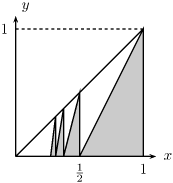
Alább (lásd az <a href="#fig:f_iii_vegyes_fureszfog_090605ha_01fel01" target="_self">1</a>. ábrát) egy ,,fűrészfogat" vizsgálunk, amely végtelen sok f,,fog"-ból áll. A fogak az <m:math xmlns="http://www.w3.org/1998/Math/MathML">

<m:mrow><m:mi>x</m:mi></m:mrow></m:math> tengely <m:math xmlns="http://www.w3.org/1998/Math/MathML">

<m:mrow><m:mo stretchy="false">[</m:mo><m:mn>0</m:mn><m:mo>;</m:mo><m:mn>1</m:mn><m:mo stretchy="false">]</m:mo></m:mrow></m:math> intervalluma és az <m:math xmlns="http://www.w3.org/1998/Math/MathML">

<m:mrow><m:mi>y</m:mi><m:mo>=</m:mo><m:mi>x</m:mi></m:mrow></m:math> függvény grafikonja között találhatók. A fogak derékszögű háromszögek, melyek két befogója vízszintes illetve függőleges az ábra szerint. A háromszög átfogója az origó felé haladva egyre meredekebb. A legnagyobb, az <m:math xmlns="http://www.w3.org/1998/Math/MathML">

<m:mrow><m:mo stretchy="false">(</m:mo><m:mn>1</m:mn><m:mo>;</m:mo><m:mn>1</m:mn><m:mo stretchy="false">)</m:mo></m:mrow></m:math> pontban cégződő fűrészfog bal oldala <m:math xmlns="http://www.w3.org/1998/Math/MathML">

<m:mrow><m:mn>2</m:mn></m:mrow></m:math> meredekségű, a következő fog bal oldala már <m:math xmlns="http://www.w3.org/1998/Math/MathML">

<m:mrow><m:mn>4</m:mn></m:mrow></m:math> meredekségű, majd <m:math xmlns="http://www.w3.org/1998/Math/MathML">

<m:mrow><m:mn>6</m:mn></m:mrow></m:math> meredekségű fog következik, és így tovább.
<div class="p"><!----></div>

<a name="fig:f_iii_vegyes_fureszfog_090605ha_01fel01" /><div align="center"><img src="/cache/figures/chs_f_iii/f_iii_vegyes_fureszfog_090605ha_01fel01.png" /><br />1. ábra</div>

<div class="p"><!----></div>

<b>a)</b> Mutassuk meg, hogy a fogazat (a ferde átfogók <m:math xmlns="http://www.w3.org/1998/Math/MathML">

<m:mrow><m:mi>x</m:mi></m:mrow></m:math> tengellyel alkotott metszéspontjai) tartanak az origóhoz (<m:math xmlns="http://www.w3.org/1998/Math/MathML">

<m:mrow><m:mi>x</m:mi><m:mo>=</m:mo><m:mn>0</m:mn></m:mrow></m:math>-hoz)! 

<div class="p"><!----></div>

<b>b)</b> Határozzuk meg a háromszögek területének összegét!
<br />&nbsp;<br /><div align="right">[ <a class="link" href="exercise_box.php?mode=sne-s-j-&amp;label=F.III%3A%3Af_iii_vegyes_fureszfog_090605ha_01" target="_blank" onclick="mutat('exercise_box.php?mode=sne-s-j-&amp;label=F.III%3A%3Af_iii_vegyes_fureszfog_090605ha_01'); return false;">&nbsp;Megoldás&nbsp;</a>&nbsp;] </div></div>
<div align="center"><h3 class="fejezet">Elliptikus integrálok</h3></div>
<div class="feladat"><b>Feladat: 9.4.</b><br /> <a name="f_iii_vegyes_ellint_090605ha_01" /><a href="bib_box.php?mode=sne---j-&amp;citation_num=" target="bib_box" onclick="mutat('bib_box.php?mode=sne---j-&amp;citation_num='); return false;"></a>Ez a feladat az <m:math xmlns="http://www.w3.org/1998/Math/MathML">

<m:mrow>

<m:msub><m:mrow><m:mi>I</m:mi></m:mrow><m:mrow><m:mn>0</m:mn></m:mrow>

</m:msub>

<m:mo stretchy="false">(</m:mo><m:mi mathvariant="italic">&xi;</m:mi><m:mo stretchy="false">)</m:mo><m:mo>=</m:mo>

<m:msubsup><m:mrow><m:mo>&int;</m:mo></m:mrow><m:mrow><m:mn>0</m:mn> </m:mrow>

<m:mrow><m:mi mathvariant="italic">&xi;</m:mi></m:mrow></m:msubsup>

<m:mfrac><m:mrow><m:mi mathvariant="italic">dx</m:mi></m:mrow>

<m:mrow><m:msqrt><m:mrow><m:mn>1</m:mn><m:mo>-</m:mo>

<m:msup><m:mrow><m:mi>x</m:mi></m:mrow><m:mrow><m:mn>2</m:mn></m:mrow>

</m:msup>

</m:mrow></m:msqrt></m:mrow>

</m:mfrac>

</m:mrow></m:math> integrálról szól, amely az origó középpontú egységkör azon ívének hosszát adja meg,amelynek <m:math xmlns="http://www.w3.org/1998/Math/MathML">

<m:mrow><m:mi>x</m:mi></m:mrow></m:math> tengelyre eső vetülete a  <m:math xmlns="http://www.w3.org/1998/Math/MathML">

<m:mrow><m:mo stretchy="false">[</m:mo><m:mn>0</m:mn><m:mo>;</m:mo><m:mi mathvariant="italic">&xi;</m:mi><m:mo stretchy="false">]</m:mo></m:mrow></m:math> intervallum.

A primitívfüggvény felhasználása nélkül számítsuk ki az 

<div class="p"><!----></div>

<b>a)</b> <m:math xmlns="http://www.w3.org/1998/Math/MathML">

<m:mrow><m:mi>&emsp;&emsp;&emsp;&emsp;&emsp;&emsp;</m:mi><m:mi>x</m:mi><m:mo>=</m:mo><m:msqrt><m:mrow><m:mn>1</m:mn><m:mo>-</m:mo>

<m:msup><m:mrow><m:mi>u</m:mi></m:mrow><m:mrow><m:mn>2</m:mn></m:mrow>

</m:msup>

</m:mrow></m:msqrt></m:mrow></m:math>,

<div class="p"><!----></div>

<b>b)</b> <m:math xmlns="http://www.w3.org/1998/Math/MathML">

<m:mrow><m:mi>&emsp;&emsp;&emsp;&emsp;&emsp;&emsp;</m:mi><m:mi>x</m:mi><m:mo>=</m:mo><m:msqrt><m:mrow>

<m:mfrac><m:mrow><m:mn>1</m:mn><m:mo>-</m:mo><m:msqrt><m:mrow><m:mn>1</m:mn><m:mo>-</m:mo>

<m:msup><m:mrow><m:mi>z</m:mi></m:mrow><m:mrow><m:mn>2</m:mn></m:mrow>

</m:msup>

</m:mrow></m:msqrt></m:mrow>

<m:mrow><m:mn>2</m:mn></m:mrow>

</m:mfrac>

</m:mrow></m:msqrt><m:mi>&emsp;&emsp;&emsp;&emsp;&emsp;&emsp;</m:mi><m:mi>&emsp;&emsp;&emsp;&emsp;&emsp;&emsp;</m:mi><m:mo stretchy="false">(</m:mo><m:mn>0</m:mn><m:mo>&le;</m:mo><m:mi>x</m:mi><m:mo>,</m:mo><m:mi mathvariant="italic">&xi;</m:mi><m:mo>&le;</m:mo>

<m:mfrac><m:mrow><m:mn>1</m:mn></m:mrow>

<m:mrow><m:msqrt><m:mrow><m:mn>2</m:mn></m:mrow></m:msqrt></m:mrow>

</m:mfrac>

<m:mo stretchy="false">)</m:mo></m:mrow></m:math>

<div class="p"><!----></div>

helyettesítéssel adódó új integrandusokat <m:math xmlns="http://www.w3.org/1998/Math/MathML">

<m:mrow><m:mo stretchy="false">(</m:mo><m:mn>0</m:mn><m:mo>&le;</m:mo><m:mi>u</m:mi><m:mo>,</m:mo><m:mi>z</m:mi><m:mo>&le;</m:mo><m:mn>1</m:mn><m:mo stretchy="false">)</m:mo></m:mrow></m:math>, és az integrálás határait. Értelmezzük a kapott eredményt!
<br />&nbsp;<br /><div align="right">[ <a class="link" href="exercise_box.php?mode=sne-s-j-&amp;label=F.III%3A%3Af_iii_vegyes_ellint_090605ha_01" target="_blank" onclick="mutat('exercise_box.php?mode=sne-s-j-&amp;label=F.III%3A%3Af_iii_vegyes_ellint_090605ha_01'); return false;">&nbsp;Megoldás&nbsp;</a>&nbsp;] </div></div>

<div class="feladat"><b>Feladat: 9.5.</b><br /> <a name="f_iii_vegyes_ellint_090605ha_02" /><a href="bib_box.php?mode=sne---j-&amp;citation_num=" target="bib_box" onclick="mutat('bib_box.php?mode=sne---j-&amp;citation_num='); return false;"></a>(<em>Fagnano a lemniszkátáról</em>)

<div class="p"><!----></div>

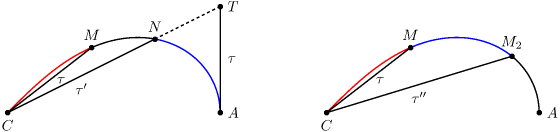
<b>a)</b> Mutassuk meg, hogy  a Bernoulli-féle lemniszkáta (lásd a <a href="chapter.php?mode=sne---j-&amp;volume=f_iii&amp;code=F.III&amp;chapter=chs_f_iii/f_iii_gorbek&amp;chapternum=7&amp;topic=Függvények&amp;yearpair=11--12#fv_iii_090605ha_gorbek_04" target="_self">7.5</a>. feladatot) origóból induló <m:math xmlns="http://www.w3.org/1998/Math/MathML">

<m:mrow><m:mi mathvariant="italic">&tau;</m:mi></m:mrow></m:math> hosszú húrjához tartozó ívének hossza (lásd az <a href="#fig:f_iii_vegyes_ellint_090605ha_02fel01" target="_self">1</a>. ábrát):

<table width="100%"><tr><td align="center"><br />

<table width="100%"><tr><td align="center">

    <m:math xmlns="http://www.w3.org/1998/Math/MathML">

    <m:mstyle displaystyle="true"><m:mrow>

<m:msubsup><m:mrow><m:mo>&int;</m:mo></m:mrow><m:mrow><m:mn>0</m:mn> </m:mrow>

<m:mrow><m:mi mathvariant="italic">&tau;</m:mi></m:mrow></m:msubsup>

<m:mfrac><m:mrow><m:mi mathvariant="italic">dt</m:mi></m:mrow>

<m:mrow><m:msqrt><m:mrow><m:mn>1</m:mn><m:mo>-</m:mo>

<m:msup><m:mrow><m:mi>t</m:mi></m:mrow><m:mrow><m:mn>4</m:mn></m:mrow>

</m:msup>

</m:mrow></m:msqrt></m:mrow>

</m:mfrac>

<m:mo>.</m:mo></m:mrow>

    </m:mstyle></m:math>

</td></tr></table>

<br />

<a name="eq:lemniszkatahosszint_081210ha01fel" /></td><td width="1">(1)</td></tr></table>

<div class="p"><!----></div>

<a name="fig:f_iii_vegyes_ellint_090605ha_02fel01" /><div align="center"><img src="/cache/figures/chs_f_iii/f_iii_vegyes_ellint_090605ha_02fel01.png" /><br />1. ábra</div>

<div class="p"><!----></div>

<b>b)</b> Mutassuk meg, hogy a lemniszkáta görbén a <m:math xmlns="http://www.w3.org/1998/Math/MathML">

<m:mrow><m:mi mathvariant="italic">CM</m:mi><m:mo>=</m:mo><m:mi mathvariant="italic">&tau;</m:mi></m:mrow></m:math> hosszúságú és a 

<br />

<table width="100%"><tr><td align="center">

    <m:math xmlns="http://www.w3.org/1998/Math/MathML">

    <m:mstyle displaystyle="true"><m:mrow><m:mi mathvariant="italic">CN</m:mi><m:mo>=</m:mo><m:mi mathvariant="italic">&tau;</m:mi><m:mo>'</m:mo><m:mo>=</m:mo><m:msqrt><m:mrow>

<m:mfrac><m:mrow><m:mn>1</m:mn><m:mo>-</m:mo>

<m:msup><m:mrow><m:mi mathvariant="italic">&tau;</m:mi></m:mrow><m:mrow><m:mn>2</m:mn></m:mrow>

</m:msup>

</m:mrow>

<m:mrow><m:mn>1</m:mn><m:mo>+</m:mo>

<m:msup><m:mrow><m:mi mathvariant="italic">&tau;</m:mi></m:mrow><m:mrow><m:mn>2</m:mn></m:mrow>

</m:msup>

</m:mrow>

</m:mfrac>

</m:mrow></m:msqrt></m:mrow>

    </m:mstyle></m:math>

</td></tr></table>

<br />

hosszúságú húrhoz tartozó ívek negyedívre egészítik ki egymást, azaz a <m:math xmlns="http://www.w3.org/1998/Math/MathML">

<m:mrow>

<m:mover><m:mrow><m:mi mathvariant="italic">CM</m:mi></m:mrow>

<m:mo stretchy="true">&Hat;</m:mo></m:mover>

</m:mrow></m:math> ív az <m:math xmlns="http://www.w3.org/1998/Math/MathML">

<m:mrow>

<m:mover><m:mrow><m:mi mathvariant="italic">AN</m:mi></m:mrow>

<m:mo stretchy="true">&Hat;</m:mo></m:mover>

</m:mrow></m:math> ívvel, a <m:math xmlns="http://www.w3.org/1998/Math/MathML">

<m:mrow>

<m:mover><m:mrow><m:mi mathvariant="italic">CN</m:mi></m:mrow>

<m:mo stretchy="true">&Hat;</m:mo></m:mover>

</m:mrow></m:math> ív pedig az <m:math xmlns="http://www.w3.org/1998/Math/MathML">

<m:mrow>

<m:mover><m:mrow><m:mi mathvariant="italic">AM</m:mi></m:mrow>

<m:mo stretchy="true">&Hat;</m:mo></m:mover>

</m:mrow></m:math> ívvel egyenlő hosszú.

<div class="p"><!----></div>

<b>c)</b> Mutassuk meg, hogy a lemniszkáta görbén a <m:math xmlns="http://www.w3.org/1998/Math/MathML">

<m:mrow><m:mi mathvariant="italic">CM</m:mi><m:mo>=</m:mo><m:mi mathvariant="italic">&tau;</m:mi></m:mrow></m:math> hosszúságú húrhoz tartozó ív hosszának kétszeresével egyenlő a 

<br />

<table width="100%"><tr><td align="center">

    <m:math xmlns="http://www.w3.org/1998/Math/MathML">

    <m:mstyle displaystyle="true"><m:mrow>

<m:msub><m:mrow><m:mi mathvariant="italic">CM</m:mi></m:mrow><m:mrow><m:mn>2</m:mn></m:mrow>

</m:msub>

<m:mo>=</m:mo><m:mi mathvariant="italic">&tau;</m:mi>"<m:mo>=</m:mo>

<m:mfrac><m:mrow><m:mn>2</m:mn><m:mi mathvariant="italic">&tau;</m:mi><m:msqrt><m:mrow><m:mn>1</m:mn><m:mo>-</m:mo>

<m:msup><m:mrow><m:mi mathvariant="italic">&tau;</m:mi></m:mrow><m:mrow><m:mn>4</m:mn></m:mrow>

</m:msup>

</m:mrow></m:msqrt></m:mrow>

<m:mrow><m:mn>1</m:mn><m:mo>+</m:mo>

<m:msup><m:mrow><m:mi mathvariant="italic">&tau;</m:mi></m:mrow><m:mrow><m:mn>4</m:mn></m:mrow>

</m:msup>

</m:mrow>

</m:mfrac>

</m:mrow>

    </m:mstyle></m:math>

</td></tr></table>

<br />

hosszúságú húrhoz tartozó ív hossza.

<div class="p"><!----></div>

<b>d)</b> Mutassuk meg, hogy ha a lemniszkáta <m:math xmlns="http://www.w3.org/1998/Math/MathML">

<m:mrow><m:mi mathvariant="italic">CA</m:mi></m:mrow></m:math> tengelyére merőlegest állítunk az <m:math xmlns="http://www.w3.org/1998/Math/MathML">

<m:mrow><m:mi>A</m:mi></m:mrow></m:math> végpontban és erre felmérjük az <m:math xmlns="http://www.w3.org/1998/Math/MathML">

<m:mrow><m:mi mathvariant="italic">AT</m:mi><m:mo>=</m:mo><m:mi mathvariant="italic">CM</m:mi></m:mrow></m:math> szakaszt, akkor a <m:math xmlns="http://www.w3.org/1998/Math/MathML">

<m:mrow><m:mi mathvariant="italic">CT</m:mi></m:mrow></m:math> félegyenes kimetszi a lemniszkátából azt az <m:math xmlns="http://www.w3.org/1998/Math/MathML">

<m:mrow><m:mi>N</m:mi></m:mrow></m:math> pontot, amelyre a <m:math xmlns="http://www.w3.org/1998/Math/MathML">

<m:mrow>

<m:mover><m:mrow><m:mi mathvariant="italic">CM</m:mi></m:mrow>

<m:mo stretchy="true">&Hat;</m:mo></m:mover>

</m:mrow></m:math>, <m:math xmlns="http://www.w3.org/1998/Math/MathML">

<m:mrow>

<m:mover><m:mrow><m:mi mathvariant="italic">NA</m:mi></m:mrow>

<m:mo stretchy="true">&Hat;</m:mo></m:mover>

</m:mrow></m:math> lemniszkátaívek egyenlő hosszúak.
<br />&nbsp;<br /></div>

<div class="feladat"><b>Feladat: 9.6.</b><br /> <a name="f_iii_vegyes_ellint_090605ha_03" /><a href="bib_box.php?mode=sne---j-&amp;citation_num=" target="bib_box" onclick="mutat('bib_box.php?mode=sne---j-&amp;citation_num='); return false;"></a>(<em>Fagnano és az ellipszis</em>)

<div class="p"><!----></div>

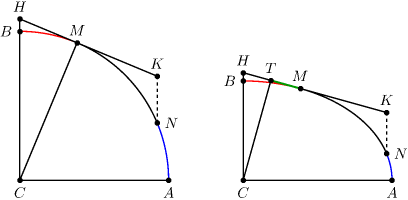
<b>a)</b> Tekintsük a <m:math xmlns="http://www.w3.org/1998/Math/MathML">

<m:mrow><m:mi>C</m:mi></m:mrow></m:math> középpontú <m:math xmlns="http://www.w3.org/1998/Math/MathML">

<m:mrow><m:mi>r</m:mi></m:mrow></m:math> sugarú <m:math xmlns="http://www.w3.org/1998/Math/MathML">

<m:mrow><m:mi>k</m:mi></m:mrow></m:math> kör <m:math xmlns="http://www.w3.org/1998/Math/MathML">

<m:mrow>

<m:mover><m:mrow><m:mi mathvariant="italic">AB</m:mi></m:mrow>

<m:mo stretchy="true">&Hat;</m:mo></m:mover>

</m:mrow></m:math> negyedkörívét és rajta a tetszőlegesen felvett <m:math xmlns="http://www.w3.org/1998/Math/MathML">

<m:mrow><m:mi>M</m:mi></m:mrow></m:math> pontot (lásd az <a href="#fig:f_iii_vegyes_ellint_090605ha_03fel01" target="_self">1</a>. ábrát). A <m:math xmlns="http://www.w3.org/1998/Math/MathML">

<m:mrow><m:mi>k</m:mi></m:mrow></m:math> kör <m:math xmlns="http://www.w3.org/1998/Math/MathML">

<m:mrow><m:mi>M</m:mi></m:mrow></m:math>-beli érintőjén vegyük fel a <m:math xmlns="http://www.w3.org/1998/Math/MathML">

<m:mrow><m:mi>H</m:mi></m:mrow></m:math>, <m:math xmlns="http://www.w3.org/1998/Math/MathML">

<m:mrow><m:mi>K</m:mi></m:mrow></m:math> pontokat úgy, hogy <m:math xmlns="http://www.w3.org/1998/Math/MathML">

<m:mrow><m:mi>H</m:mi></m:mrow></m:math> a <m:math xmlns="http://www.w3.org/1998/Math/MathML">

<m:mrow><m:mi mathvariant="italic">CB</m:mi></m:mrow></m:math> félegyenes metszéspontja legyen, míg <m:math xmlns="http://www.w3.org/1998/Math/MathML">

<m:mrow><m:mi>K</m:mi></m:mrow></m:math> a <m:math xmlns="http://www.w3.org/1998/Math/MathML">

<m:mrow><m:mi>H</m:mi></m:mrow></m:math>-tól <m:math xmlns="http://www.w3.org/1998/Math/MathML">

<m:mrow><m:mi>M</m:mi></m:mrow></m:math> felé helyezkedjék el <m:math xmlns="http://www.w3.org/1998/Math/MathML">

<m:mrow><m:mi>H</m:mi></m:mrow></m:math>-tól <m:math xmlns="http://www.w3.org/1998/Math/MathML">

<m:mrow><m:mi>r</m:mi></m:mrow></m:math> távolságra. Messe a <m:math xmlns="http://www.w3.org/1998/Math/MathML">

<m:mrow><m:mi>K</m:mi></m:mrow></m:math>-n át húzott <m:math xmlns="http://www.w3.org/1998/Math/MathML">

<m:mrow><m:mi mathvariant="italic">CB</m:mi></m:mrow></m:math>-vel párhuzamos egyenes a negyedkörívet az <m:math xmlns="http://www.w3.org/1998/Math/MathML">

<m:mrow><m:mi>N</m:mi></m:mrow></m:math> pontban. Mutassuk meg, hogy a kör <m:math xmlns="http://www.w3.org/1998/Math/MathML">

<m:mrow>

<m:mover><m:mrow><m:mi mathvariant="italic">BM</m:mi></m:mrow>

<m:mo stretchy="true">&Hat;</m:mo></m:mover>

</m:mrow></m:math>, <m:math xmlns="http://www.w3.org/1998/Math/MathML">

<m:mrow>

<m:mover><m:mrow><m:mi mathvariant="italic">NA</m:mi></m:mrow>

<m:mo stretchy="true">&Hat;</m:mo></m:mover>

</m:mrow></m:math> ívei egyenlők.

<div class="p"><!----></div>

<a name="fig:f_iii_vegyes_ellint_090605ha_03fel01" /><div align="center"><img src="/cache/figures/chs_f_iii/f_iii_vegyes_ellint_090605ha_03fel01.png" /><br />1. ábra</div>

<div class="p"><!----></div>

<b>b)</b> (<em>Fagnano pont, mint extrémum</em>)

<div class="p"><!----></div>

Most egy <m:math xmlns="http://www.w3.org/1998/Math/MathML">

<m:mrow><m:mi>k</m:mi></m:mrow></m:math> ellipszist vizsgálunk, melynek középpontja <m:math xmlns="http://www.w3.org/1998/Math/MathML">

<m:mrow><m:mi>C</m:mi></m:mrow></m:math>, fél nagytengelye <m:math xmlns="http://www.w3.org/1998/Math/MathML">

<m:mrow><m:mi mathvariant="italic">CA</m:mi></m:mrow></m:math>, fél kistengelye <m:math xmlns="http://www.w3.org/1998/Math/MathML">

<m:mrow><m:mi mathvariant="italic">CB</m:mi></m:mrow></m:math>. Tekintsük az ellipszis <m:math xmlns="http://www.w3.org/1998/Math/MathML">

<m:mrow>

<m:mover><m:mrow><m:mi mathvariant="italic">AB</m:mi></m:mrow>

<m:mo stretchy="true">&Hat;</m:mo></m:mover>

</m:mrow></m:math> negyedívén egy tetszőleges <m:math xmlns="http://www.w3.org/1998/Math/MathML">

<m:mrow><m:mi>M</m:mi></m:mrow></m:math> pontot és legyen a <m:math xmlns="http://www.w3.org/1998/Math/MathML">

<m:mrow><m:mi>C</m:mi></m:mrow></m:math> középpont merőleges vetülete az ellipszis <m:math xmlns="http://www.w3.org/1998/Math/MathML">

<m:mrow><m:mi>M</m:mi></m:mrow></m:math>-beli érintőjén <m:math xmlns="http://www.w3.org/1998/Math/MathML">

<m:mrow><m:mi>T</m:mi></m:mrow></m:math>. Határozzuk meg az <m:math xmlns="http://www.w3.org/1998/Math/MathML">

<m:mrow><m:mi mathvariant="italic">MT</m:mi></m:mrow></m:math> szakasz hosszának maximumát!

<div class="p"><!----></div>

<b>c)</b> Tekintsük még az ellipszis <m:math xmlns="http://www.w3.org/1998/Math/MathML">

<m:mrow><m:mi>M</m:mi></m:mrow></m:math>-beli érintőjén a <m:math xmlns="http://www.w3.org/1998/Math/MathML">

<m:mrow><m:mi>H</m:mi></m:mrow></m:math>, <m:math xmlns="http://www.w3.org/1998/Math/MathML">

<m:mrow><m:mi>K</m:mi></m:mrow></m:math> pontokat úgy, hogy <m:math xmlns="http://www.w3.org/1998/Math/MathML">

<m:mrow><m:mi>H</m:mi></m:mrow></m:math> a <m:math xmlns="http://www.w3.org/1998/Math/MathML">

<m:mrow><m:mi mathvariant="italic">CB</m:mi></m:mrow></m:math> félegyenes metszéspontja legyen, míg <m:math xmlns="http://www.w3.org/1998/Math/MathML">

<m:mrow><m:mi>K</m:mi></m:mrow></m:math> a <m:math xmlns="http://www.w3.org/1998/Math/MathML">

<m:mrow><m:mi>H</m:mi></m:mrow></m:math>-tól <m:math xmlns="http://www.w3.org/1998/Math/MathML">

<m:mrow><m:mi>M</m:mi></m:mrow></m:math> felé helyezkedjék el <m:math xmlns="http://www.w3.org/1998/Math/MathML">

<m:mrow><m:mi>H</m:mi></m:mrow></m:math>-tól a <m:math xmlns="http://www.w3.org/1998/Math/MathML">

<m:mrow><m:mi mathvariant="italic">CA</m:mi></m:mrow></m:math> fél nagytengellyel egyenlő távolságra. Messe a <m:math xmlns="http://www.w3.org/1998/Math/MathML">

<m:mrow><m:mi>K</m:mi></m:mrow></m:math>-n át húzott <m:math xmlns="http://www.w3.org/1998/Math/MathML">

<m:mrow><m:mi mathvariant="italic">CB</m:mi></m:mrow></m:math>-vel párhuzamos egyenes a negyed ellipszisívet az <m:math xmlns="http://www.w3.org/1998/Math/MathML">

<m:mrow><m:mi>N</m:mi></m:mrow></m:math> pontban. Mutassuk meg, hogy az ellipszis <m:math xmlns="http://www.w3.org/1998/Math/MathML">

<m:mrow>

<m:mover><m:mrow><m:mi mathvariant="italic">BM</m:mi></m:mrow>

<m:mo stretchy="true">&Hat;</m:mo></m:mover>

</m:mrow></m:math>, <m:math xmlns="http://www.w3.org/1998/Math/MathML">

<m:mrow>

<m:mover><m:mrow><m:mi mathvariant="italic">NA</m:mi></m:mrow>

<m:mo stretchy="true">&Hat;</m:mo></m:mover>

</m:mrow></m:math> íveinek különbsége a <m:math xmlns="http://www.w3.org/1998/Math/MathML">

<m:mrow><m:mi mathvariant="italic">TM</m:mi></m:mrow></m:math> szakasz hosszával egyenlő.

<div class="p"><!----></div>

<b>d)</b> (<em>Fagnano pont, mint kerületfelező</em>)

<div class="p"><!----></div>

Ha az <m:math xmlns="http://www.w3.org/1998/Math/MathML">

<m:mrow><m:mi mathvariant="italic">ACB</m:mi></m:mrow></m:math> ellipszisnegyed <m:math xmlns="http://www.w3.org/1998/Math/MathML">

<m:mrow><m:mi mathvariant="italic">CA</m:mi></m:mrow></m:math> féltengelyére egy <m:math xmlns="http://www.w3.org/1998/Math/MathML">

<m:mrow><m:mi mathvariant="italic">CAE</m:mi></m:mrow></m:math> egyenlő oldalú háromszöget szerkesztünk (lásd a <a href="#fig:f_iii_vegyes_ellint_090605ha_03fel02" target="_self">2</a>. ábrát), és az <m:math xmlns="http://www.w3.org/1998/Math/MathML">

<m:mrow><m:mi mathvariant="italic">AE</m:mi></m:mrow></m:math> oldalra felmérjük az <m:math xmlns="http://www.w3.org/1998/Math/MathML">

<m:mrow><m:mi mathvariant="italic">AF</m:mi><m:mo>=</m:mo><m:mi mathvariant="italic">CB</m:mi></m:mrow></m:math> féltengelyt, akkor a <m:math xmlns="http://www.w3.org/1998/Math/MathML">

<m:mrow><m:mi>C</m:mi></m:mrow></m:math> középpontú <m:math xmlns="http://www.w3.org/1998/Math/MathML">

<m:mrow><m:mi>F</m:mi></m:mrow></m:math>-en átmenő kör a <m:math xmlns="http://www.w3.org/1998/Math/MathML">

<m:mrow>

<m:mover><m:mrow><m:mi mathvariant="italic">BA</m:mi></m:mrow>

<m:mo stretchy="true">&Hat;</m:mo></m:mover>

</m:mrow></m:math> ellipszisívet egy olyan <m:math xmlns="http://www.w3.org/1998/Math/MathML">

<m:mrow><m:mi>O</m:mi></m:mrow></m:math> pontban metszi, amelyre

<br />

<table width="100%"><tr><td align="center">

    <m:math xmlns="http://www.w3.org/1998/Math/MathML">

    <m:mstyle displaystyle="true"><m:mrow><m:mi mathvariant="italic">CA</m:mi><m:mo>+</m:mo>

<m:mover><m:mrow><m:mi mathvariant="italic">AO</m:mi></m:mrow>

<m:mo stretchy="true">&Hat;</m:mo></m:mover>

<m:mo>=</m:mo><m:mi mathvariant="italic">CB</m:mi><m:mo>+</m:mo>

<m:mover><m:mrow><m:mi mathvariant="italic">BO</m:mi></m:mrow>

<m:mo stretchy="true">&Hat;</m:mo></m:mover>

<m:mo>,</m:mo></m:mrow>

    </m:mstyle></m:math>

</td></tr></table>

<br />

tehát a <m:math xmlns="http://www.w3.org/1998/Math/MathML">

<m:mrow><m:mi mathvariant="italic">CA</m:mi></m:mrow></m:math>, <m:math xmlns="http://www.w3.org/1998/Math/MathML">

<m:mrow><m:mi mathvariant="italic">CB</m:mi></m:mrow></m:math> féltengelyek és a <m:math xmlns="http://www.w3.org/1998/Math/MathML">

<m:mrow><m:mi mathvariant="italic">BC</m:mi></m:mrow></m:math> ív alkotta zárt görbe kerületét felezi a <m:math xmlns="http://www.w3.org/1998/Math/MathML">

<m:mrow><m:mi mathvariant="italic">CO</m:mi></m:mrow></m:math> egyenes.

<div class="p"><!----></div>

<a name="fig:f_iii_vegyes_ellint_090605ha_03fel02" /><div align="center"><img src="/cache/figures/chs_f_iii/f_iii_vegyes_ellint_090605ha_03fel02.png" /><br />2. ábra</div>
<br />&nbsp;<br /><div align="right">[ <a class="link" href="exercise_box.php?mode=sne-s-j-&amp;label=F.III%3A%3Af_iii_vegyes_ellint_090605ha_03" target="_blank" onclick="mutat('exercise_box.php?mode=sne-s-j-&amp;label=F.III%3A%3Af_iii_vegyes_ellint_090605ha_03'); return false;">&nbsp;Megoldás&nbsp;</a>&nbsp;] </div></div>
<div style="height:30pt;">&nbsp;</div>
<div id="navigation">


<div class="navcenter">
<div class="navdiv">
<a href="index.html">&nbsp;Matkönyv megjelenítő főoldal&nbsp;</a>&nbsp;
|&nbsp;<a href="list_html.php?mode=sne---j-">&nbsp;Matkönyv feladatgyűjtemények listája&nbsp;</a>&nbsp;
|&nbsp;<a href="volume.php?mode=sne---j-&amp;volume=f_iii">&nbsp;Tartalomjegyzék&nbsp;</a></div>
</div></div></body></html>